


UnitedHealth, BlackRock, and Stanley Black & Decker Just Paid Shareholders. Here’s What They Got.
UnitedHealth, BlackRock, and Stanley Black & Decker Just Paid Shareholders. Here’s What They Got.
Trey ThoelckeFri, September 25, 2026 at 12:05 PM UTC
0
24/7 Wall St.Quick Read -
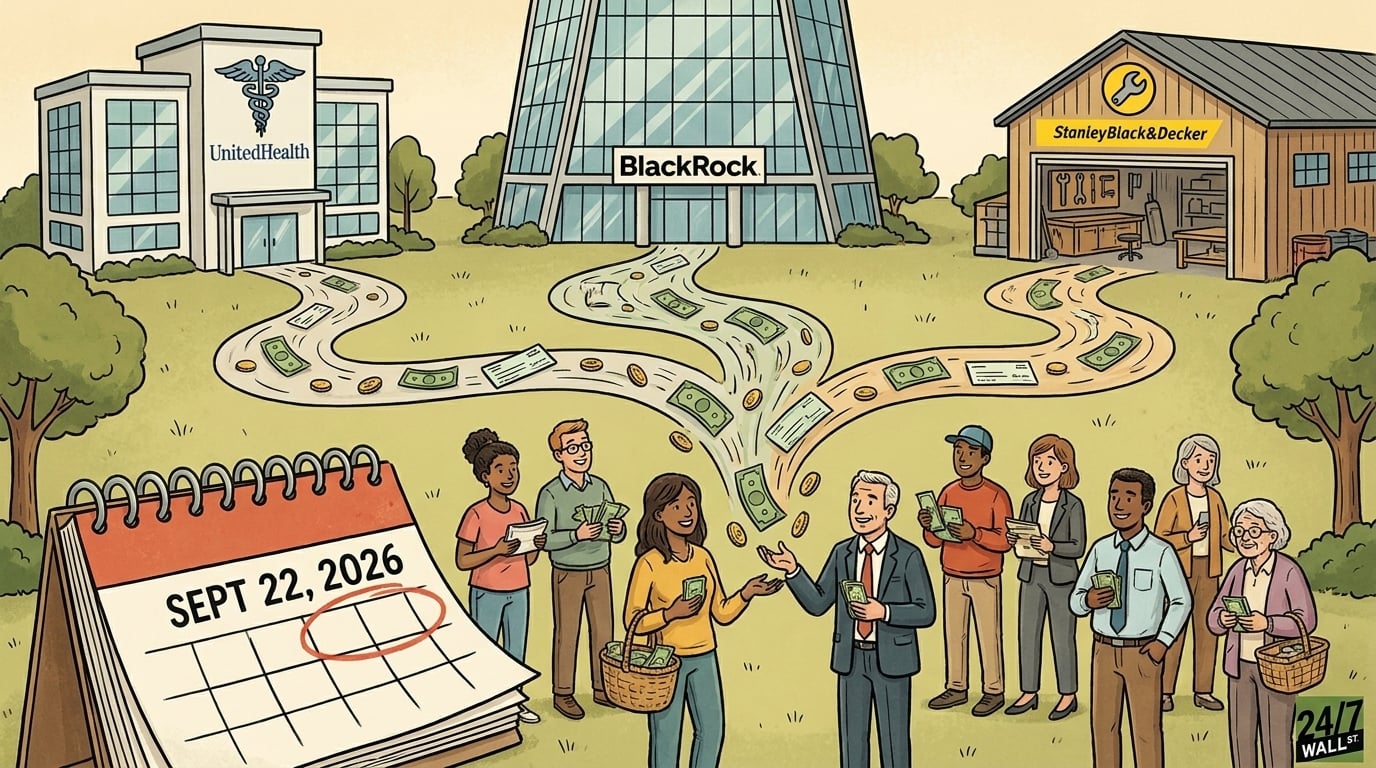
UnitedHealth paid $2.32, BlackRock $5.73, and Stanley Black & Decker $0.84 per share on September 22, 2026.
Stanley Black & Decker delivered the only fresh dividend raise of the group, lifting its payout to $0.84 and earning the highest yield at 3.6%.
BlackRock raises dividends in January, UnitedHealth in June, and SWK in July, illustrating how diversified dividend portfolios spread income risk across independent business cycles.
Building a portfolio and living off one are two completely different skills, and almost nobody teaches the second. This problem is what The Definitive Guide to Retirement Income helps, and it is free today. Read more here. (Sponsor)
A health insurer, the world's largest asset manager, and a toolmaker operate in unrelated businesses, yet UnitedHealth (NYSE:UNH), BlackRock (NYSE:BLK), and Stanley Black & Decker (NYSE:SWK) all paid shareholders on the same day: September 22, 2026. An investor holding one share of each collected the following:
UnitedHealth: $2.32 per share
BlackRock: $5.73 per share
Stanley Black & Decker: $0.84 per share
Only one of those checks arrived at a freshly raised rate. Stanley Black & Decker lifted its payout from the prior quarter, making this its first payment at the new level. UnitedHealth and BlackRock paid at rates their boards had already raised earlier in 2026, so their September checks matched June's. Here is how each payment stacks up.
Three Dates That Decide Who Gets Paid
Every dividend runs on three dates worth knowing:
Declaration date: the day the board formally approves the payment.
Ex-dividend date: the ownership cutoff. Own the stock before it and you get the check. Buy on or after it and the payment goes to the seller.
Payment date: the day the cash lands in your brokerage account.
UnitedHealth: A $2.32 Check Locked In by a June Raise
UnitedHealth's September payment of $2.32 per share matched the prior quarter's $2.32. The board lifted the rate earlier in the year: the first $2.32 check was paid on June 23, 2026, following a June 3, 2026, declaration, after the company paid $2.21 in March.
The year-over-year step-up is clear compared with the same quarter of 2025, when UnitedHealth paid $2.21 per share on September 23, 2025. This quarter's payment was declared on August 11, 2026, with an ex-dividend date of September 14, 2026.
Trailing 12-month dividends: $9.06 per share
Forward annualized dividend: $9.28 per share
Current yield: 2.4%
Shares last traded at $375.02. The stock has slipped 5.4% over the past month but is up 11.5% year to date and 8.5% over the past year.
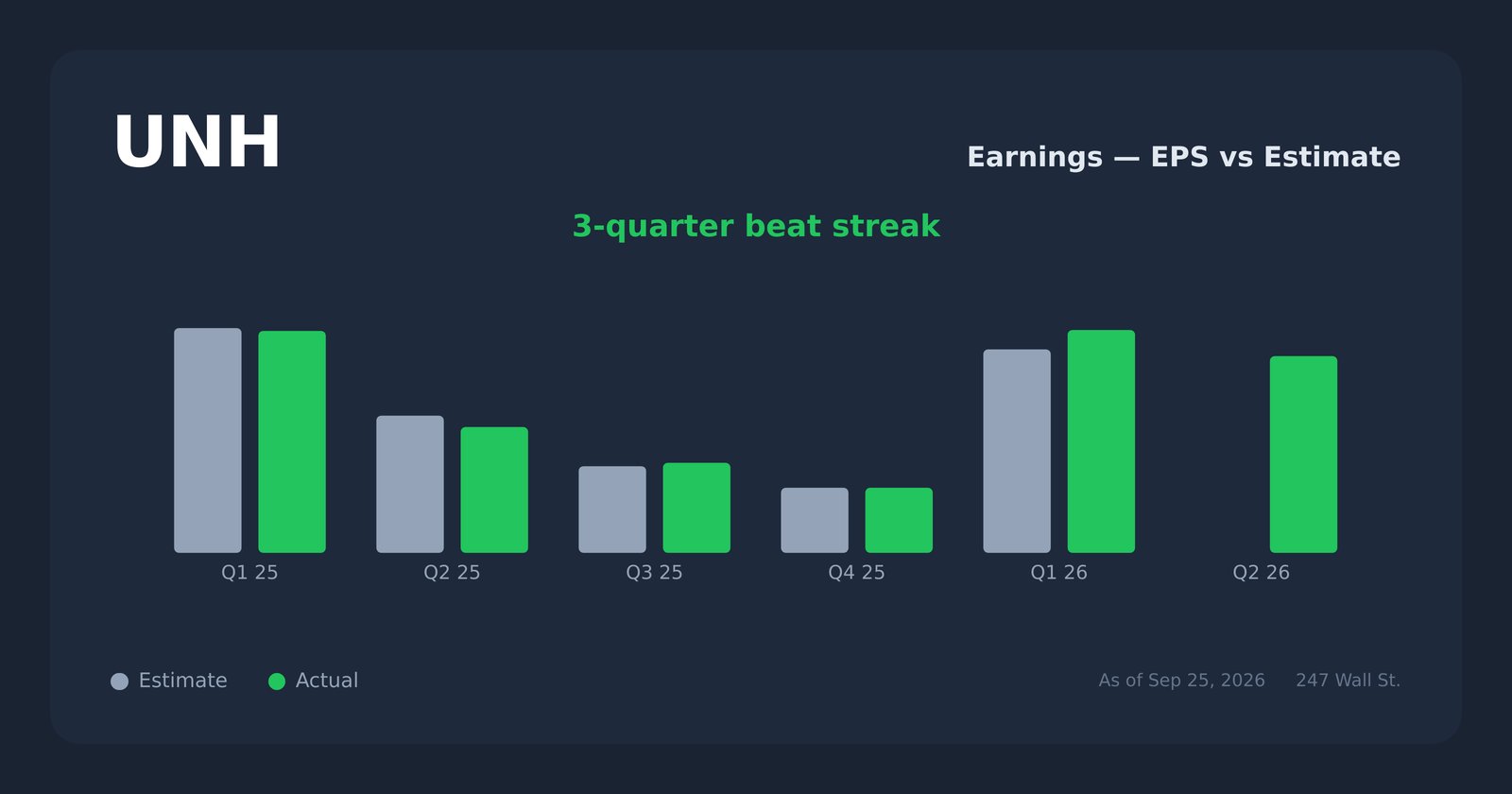
The earnings background supports the payout. In its second-quarter 2026 report, UnitedHealth posted EPS of $6.38, as net income climbed 61.0% year over year and the medical care ratio improved to 86.7% from 89.4%. Management raised its full-year adjusted EPS outlook to $19.50 to $20.00, guided operating cash flow to roughly $24 billion, and lifted planned buybacks to at least $5 billion. The stock trades at about 17x forward earnings.
UNH Earnings Explorer — 24/7 Wall St.BlackRock: Biggest Check, Smallest Yield
BlackRock sent the largest per-share check of the three by a wide margin: $5.73 per share. The pattern mirrors UnitedHealth's. The higher rate was declared on January 15, 2026, a 10% increase, and has been held steady for all three 2026 payments. The comparable 2025 payments were $5.21 per share. September's check was declared on July 22, 2026, with an ex-dividend date of September 8, 2026.
Trailing 12-month dividends: $22.40 per share
Forward annualized dividend: $22.92 per share
Current yield: 2.1%
That yield figure deserves attention. A large per-share dividend reflects a high share price. BlackRock shares last traded at $1,073.45, so the $5.73 check works out to a current yield of 2.1%, the lowest of the three companies in this comparison. Yield, which measures the payout against the price paid, tells an income investor what their capital actually earns.
Advertisement
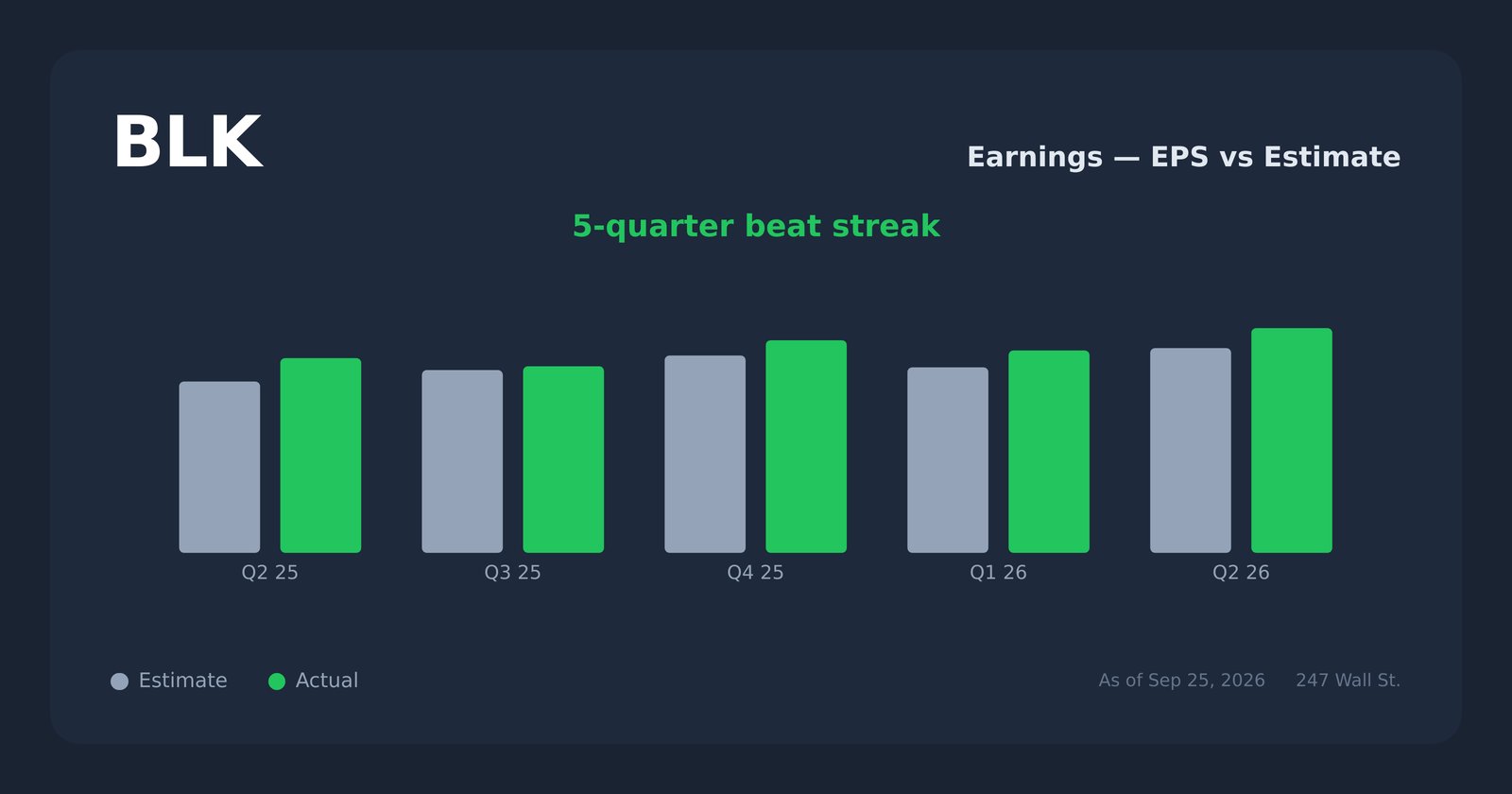
The stock has fallen 8.8% over the past month, is down 1.1% year to date and is 6.4% lower over the past year, though it outperformed competitors in Thursday's session, according to MarketWatch. Operationally, the business is firing: second-quarter adjusted EPS of $13.91 topped the $12.67 estimate, revenue rose 30.6% year over year, and assets under management reached a record $15.34 trillion on $192 billion of quarterly net inflows. BlackRock also raised planned 2026 buybacks to about $2 billion. Shares trade at roughly 16x forward earnings.
BLK Earnings Explorer — 24/7 Wall St.Stanley Black & Decker: Only Fresh Raise of the Group
Stanley Black & Decker is the standout of these three because its September payment was the first at a newly raised rate. The company paid $0.84 per share, up from $0.83 in the prior quarter. The $0.83 rate had covered the three previous payments, dated June 23, 2026, March 24, 2026, and December 16, 2025. The higher payment was declared on July 23, 2026, with an ex-dividend date of September 8, 2026.
Trailing 12-month dividends: $3.33 per share
Forward annualized dividend: $3.36 per share
Current yield: 3.6%
That yield is the highest of the three. Shares closed Thursday at $90.17, down 1.6% on the day as the stock underperformed competitors, per MarketWatch. The stock has declined 8.4% over the past month but remains up 17.9% year to date.
The raise follows a strong second quarter. Adjusted EPS of $1.57 beat the $1.20 estimate, free cash flow reached $698.2 million, and management raised its full-year adjusted EPS guide to $5.20 to $5.80 with free cash flow guided at $600 million to $800 million. After closing the CAM aerospace sale for $1.8 billion, the company directed about $1.6 billion to debt reduction. It has since agreed to sell Excel Industries to Bad Boy Mowers, according to a September 4, 2026, release. Part of the second-quarter margin increase came from a tariff refund benefit of roughly 250 basis points, a one-time boost worth monitoring when the company reports third-quarter results; it has already announced the release date. Shares trade at about 15x forward earnings.
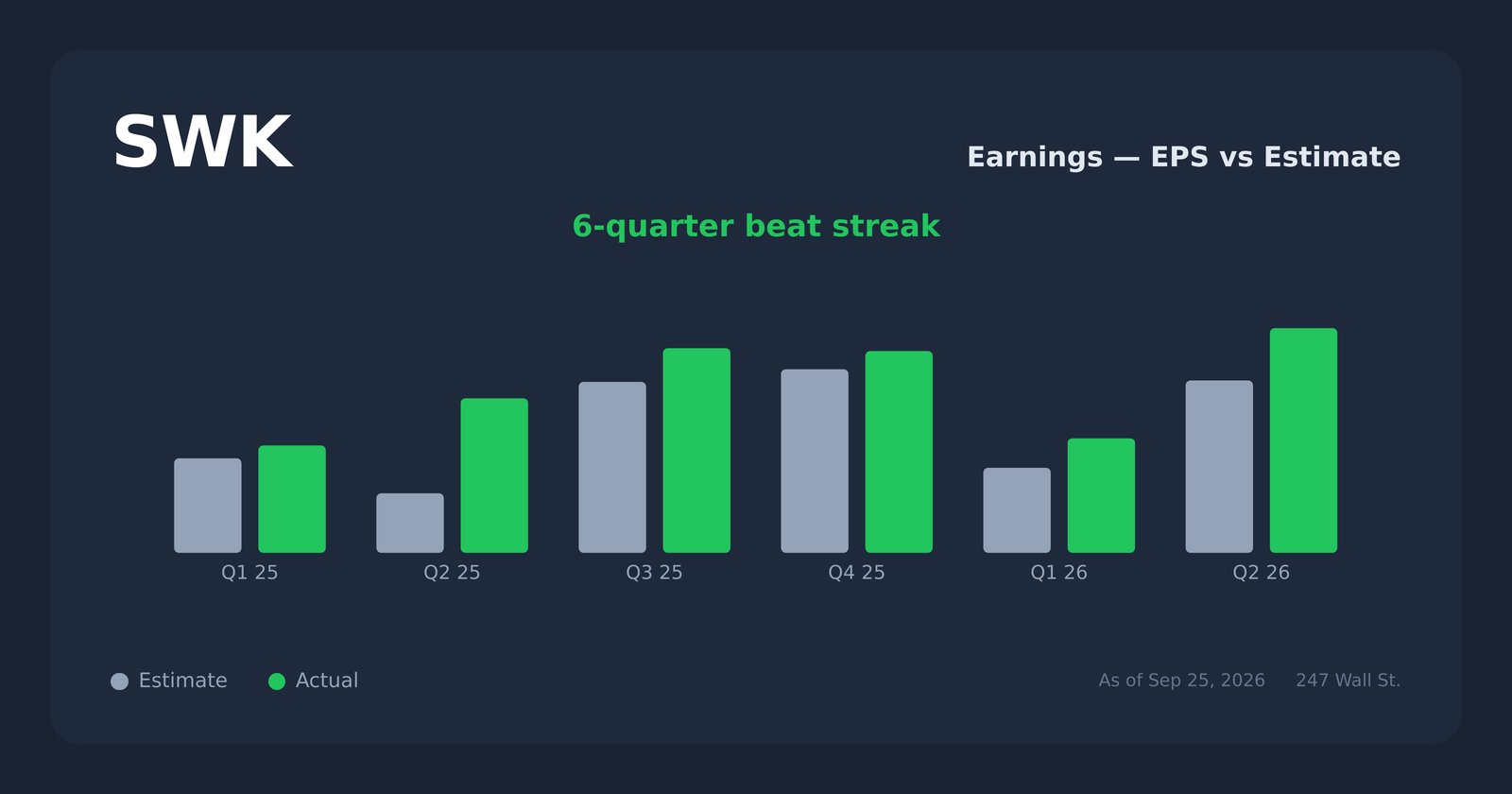
SWK Earnings Explorer — 24/7 Wall St.Scorecard: All Three Payments Side by Side
Metric
UnitedHealth
BlackRock
Stanley Black & Decker
September 22 payment
$2.32
$5.73
$0.84
Prior-quarter payment
$2.32
$5.73
$0.83
Trailing 12-month total
$9.06
$22.40
$3.33
Forward annualized
$9.28
$22.92
$3.36
Current yield
2.4%
2.1%
3.6%
Share price
$375.02
$1,073.25
$90.17
Why Staggered Raises Matter for Income Investors
Three boards on three unrelated corporate calendars approved these increases. BlackRock set its higher rate in January, UnitedHealth in June, and Stanley Black & Decker in July. Each decision came weeks or months before any money moved, and all three still landed in shareholder accounts on September 22.
For an investor holding all three, that spread works in their favor. Raises arrive throughout the year, each supported by a separate business with its own drivers: medical cost trends at UnitedHealth, asset flows at BlackRock, and tool demand and tariffs at Stanley Black & Decker. A small basket of committed payers spreads income across different boards, different cycles, and different risks, so one company's decision to hold its rate flat leaves the rest of the income stream intact. (That is the whole idea behind a dividend ladder, which we walked through building step by step in this free guide: Never Touch the Principal.) Income built on several independent payers holds up better than income tied to a single name, and September's checks show that structure in action.
Released: The Definitive Guide to Retirement Income
(Sponsor) Most people spend their entire working lives focusing on one thing: growing a pile of money. Then they retire and discover the skill they actually need is close to the opposite. Turning that pile into steady income, year after year, through good markets and bad, without ever running out.
It may be the least discussed and most consequential transition in personal finance, and plenty of otherwise careful investors walk into it with no real plan. That is exactly what The Definitive Guide to Retirement Income helps answer. It is a free guide from Fisher Investments covering what your retirement will really cost, where the cash flow should come from, and how much you can safely withdraw each year. Learn more here. Learn More Here ›
Contact editorial@247wallst.com for any questions or corrections.
Source: “AOL Money”
