


UK borrowing costs rise at fastest pace in G7
UK borrowing costs rise at fastest pace in G7

Emma TaggartMon, July 20, 2026 at 5:57 PM UTC
0
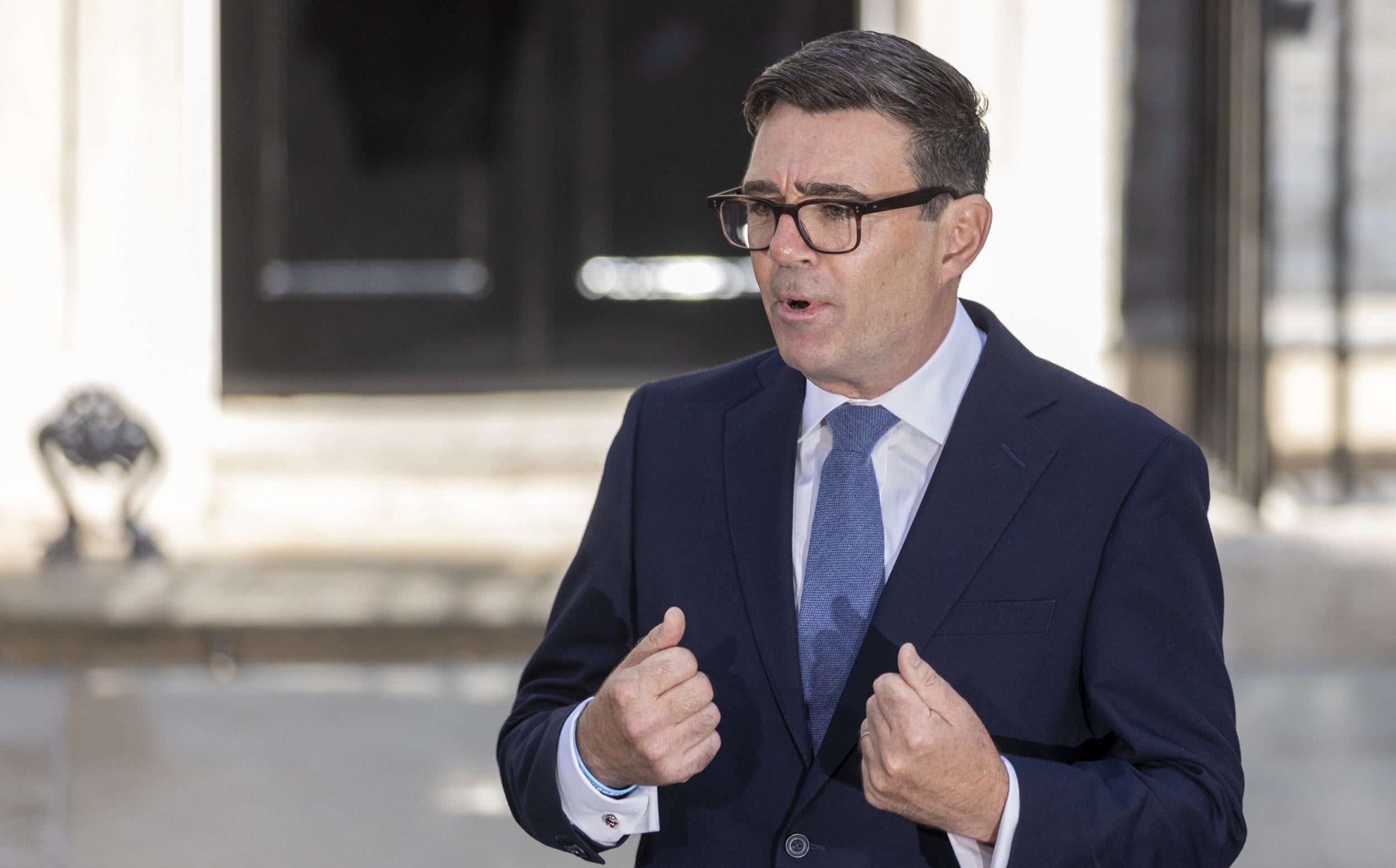
Andy Burnham, who has become the UK’s seventh prime minister in just a decade, has inherited a troubled economy - Marcin Nowak/Anadolu via Getty Images
Britain’s borrowing costs rose at the fastest pace in the G7 after Andy Burnham said he would take a “flexible” approach to the UK’s fiscal rules.
In his maiden speech as prime minister, Mr Burnham on Monday signalled he could bend the rules underpinning Britain’s finances, spooking financial markets fearful of higher government spending.
UK gilts – a benchmark for how much the Government pays on its debt – saw yields rise 0.08 percentage points to an eight-week high of 5.03pc for the 10-year bond. Thirty-year gilts also pushed higher.
The rise was the fastest in the G7, excluding Japan, whose markets are closed for a national holiday.
After markets closed on Monday, Mr Burnham surprised the City by picking John Healey as his next Chancellor.
Mr Healey, who quit over defence funding rising too slowly, will now be tasked with finding billions of pounds in Britain’s stretched public finances.
Shabana Mahmood, the former Home Secretary, had widely been expected for the role. Ed Miliband, the former Energy Secretary, was also in contention.
Mr Healey will replace Rachel Reeves, who resigned on Monday.
The appointment of Mr Healey, a veteran of the Blair-Brown government, may calm fears in the City after Mr Burnham pledged to stretch the fiscal rules by using “flexibility” within them.
Speaking in Downing Street, Mr Burnham said: “I’ve said we’ll stick to the fiscal rules, and by that I mean the existing fiscal rules, and use obviously any flexibility within them.”
James Athey, a fund manager at Marlborough, said: “It’s not a good start because bandying around the words fiscal rules seems to be believed within government circles to be a sufficient condition to get financial markets on side, and that just misunderstands an element of the problem.”
He added that investors were watching closely for any signs that the Government will increase borrowing.
Matt Amis, investment director at Aberdeen, said Mr Burnham’s comments had “got the markets’ attention.”
He said “It just shows this week in particular the language from the Burnham administration, the new chancellor, is going to be key here. The gilt market is on edge.”
Mr Burnham, who has become the UK’s seventh prime minister in just a decade, has inherited a troubled economy as businesses grapple with low confidence and strained public finances.
Monday’s comment suggests the new prime minister will use measures to raise borrowing while keeping the additional sums off the Government’s book.
The Resolution Foundation, a think tank, said he could do this by expanding the remit of institutions like the National Wealth Fund, an arms-length government investment vehicle.
His plan to use “flexibility” in the fiscal rules comes after Ms Reeves altered the main indicator of government debt in 2024.
She tweaked the primary measure of the UK’s debt to Public Sector Net Financial Liabilities, meaning that when public financial institutions borrow to invest in a private business it does not count towards the government’s fiscal rules.
However, the think tank warned that boosting the financial capacity of public financial institutions like the National Wealth Fund by £16bn would cost around £400 million a year in debt interest.
Helen Miller, director at the Institute for Fiscal Studies, warned that challenging public finances will mean Mr Burnham will be forced to make tough choices on spending.
She said: “While chancellors come and go, the underlying fiscal constraints remain the same. Public debt, borrowing and debt-interest costs are all high. One in every £12 the government spends currently goes on debt interest.”
Higher borrowing costs threaten to increase the Government’s debt interest bill, which is already forecast to hit £111.2bn for the financial year - equivalent to 8.3pc of public spending.
Mr Burnham said he would announce a set of measures on Tuesday to give households “breathing space” to help with the cost of living.
“I will set out some of those measures starting tomorrow, including how we pay for them,” he said.
“We will help more young people into education... and we will build more council homes. That is the fair and sustainable way to bring the welfare bill down, to meet our fiscal rules and to honour our commitments on defence to our international partners.”
Mr Amis said: “Tomorrow we’re getting some cost of living news. [Burnham] said he was going to state where that funding’s come from. I think that’s key, any unfunded spending from here would get the market’s attention.”
06:59pm
That’s all for today...
Thank you for following our coverage on this eventful day, where Britain’s seventh Prime Minister in a decade took charge. We’ll be back tomorrow with the latest.
06:24pm
Healey appointed Chancellor in shock move
Andy Burnham has made former defence secretary John Healey the new Chancellor in a surprise appointment, which is likely to leave Ed Miliband and Shabana Mahmood disappointed.
Mr Healey quit his job under Sir Keir Starmer in anger over a lack of funds for defence.
He will now be tasked with finding billions of pounds in Britain’s tattered public finances, with little room to borrow or cut spending without serious fights with other ministers.
Bond investors will be watching closely, with Mr Healey facing the ultimate test of market confidence at the Autumn Budget.
05:43pm
UK stocks close lower on Burnham’s first day
British equities suffered a downbeat start to the week, as Britain got its 7th prime minister in a decade.
The FTSE 100 closed 0.7pc lower, while the pound weakened 0.2pc against the dollar.
The FTSE 250 also ended the day in the red, suffering a 0.3pc fall.
It comes even as US stocks posted regained some momentum, with the S&P 500 up 0.4pc. The tech-dominated Nasdaq Composite rose 0.7pc.
05:20pm
Borrowing costs likely to remain higher than rivals’ under Burnham
Andy Burnham’s remarks that he will seek to make greater use of “flexibility” within the fiscal rules suggests that the UK will keep paying more to borrow than rivals, one of Japan’s biggest banks has warned.
Evelyne Gomez-Liechti from Mizuho said: “The real question is how much flexibility he is willing to use. Burnham said he will not unveil his 10-year plan until later this year, so for now this largely leaves room for speculation.
“For rates, it suggests that term premia may struggle to compress given the risk of less fiscal headroom, higher spending and potentially greater borrowing needs.”
The fiscal rules dictate that day-to-day spending must be funded by revenues, and debt should be falling as a share of the economy over parliament.
Ms Gomez-Liechti said Mr Burnham’s remark could point to that he is more comfortable with a smaller fiscal buffer against the rules, plans to spend more on investment or wants to delay plans to cut spending further.
She added: “All of these options have one thing in common: they imply a more fiscally expansionary policy stance.”
05:06pm
UK growth downgraded as Burnham takes power
Investec has lowered its forecast for how fast the UK economy will grow, as Andy Burnham takes power.
The investment bank and wealth manager has cut its forecasts from 1.2pc this year to 1.1pc. Next year also looks worse, with the economy growing 1.4pc rather than 1.6pc.
The reduction reflects the reignition of Donald Trump’s ill-fated war in Iran, Investec said. The bank is also unconvinced that Mr Burnham’s pledges to boost growth in every postcode will alter the UK’s trajectory over the next couple of years.
Philip Shaw and colleagues said in a note to clients: “The UK economic outlook does not appear set to change substantially under Andy Burnham’s premiership – his more radical ideas relate to the workings of government, not the fiscal stance.
“Indeed, on the latter, he faces the same constraints as his predecessor considering that he has pledged to uphold the existing fiscal rules and maintain the 2024 manifesto commitment not to raise the ‘big four’ taxes. This does not leave the new PM and his Chancellor much room to play with.”
They added that Britain’s weak job market meant that despite pressure on inflation from the war in Iran, they did not expect the Bank of England to increase interest rates for now.
04:47pm
Burnham off to a bad start, bond investors warn
Andy Burnham’s plans to stretch the fiscal rules and use them in a more flexible way is a red flag for bond markets, an investor has warned.
James Athey, a fund manager at Marlborough, said: “It’s not a good start because bandying around the words fiscal rules seems to be believed within government circles to be a sufficient condition to get financial markets on side, and that just misunderstands an element of the problem.”
He added that investors are watching closely for any signs that government will increase borrowing.
Athey said: “When your opening gambit, having just arrived in No 10, is to say we’re going to use all of the flexibility within the fiscal rules. What gilt investors are hearing is, we’re going to stick with the letter of the law, but that’s still going to come with more gilt supply. I think that’s what they’ve responded to.”
Mr Athey said: “[Burnham] needs to demonstrate that he has an economically coherent, as well as fiscally coherent strategy to deal with the problem. He also needs to demonstrate that he can deal with the challenge or threat or complaints of the left of the Parliamentary Labour Party. So far he’s done none of the above”
04:30pm
Andy Burnham suggests he will stretch fiscal rules
Andy Burnham has said he will look to increase borrowing by using “flexibility” within the fiscal rules, in a language that is likely to concern bond markets.
Mr Burnham told reporters: “I’ve said we’ll stick to the fiscal rules, and by that I mean the existing fiscal rules, and use obviously any flexibility within them.”
Seeking to reassure investors, he added: “We will stick to the existing rules and I’ve made that very clear in Downing Street. So none of this is about taking risks with the economy. I’ve never done that in any role that I’ve had.”
The new Prime Minister said he would “show how it will be funded and that will be clearly set out in our budget.”
The remarks are likely to spark some anxiety among bond investors, with many expressing doubts about Mr Burnham’s commitment to reducing borrowing.
Mr Burnham could increase borrowing without technically breaching the fiscal rules by expanding the remit of institutions like the National Wealth Fund, experts have said.
However, anything that could look like gaming the figures still risks upsetting the markets.
Matt Amis, investment director at Aberdeen, said talking of “using flexibility in the fiscal rules seems to have got the markets’ attention.”
He said “It just shows this week in particular the language from the Burnham administration, the new chancellor, is going to be key here. The gilt market is on edge.
“Tomorrow we’re getting some cost of living news. [Burnham] said he was going to state where that funding’s come from. I think that’s key, any unfunded spending from here would get the market’s attention.”
04:07pm
Reeves steps down as Chancellor
It appears Rachel Reeves has stepped down as Chancellor, sharing a post on X wishing her successor “the very best of luck”.
Ms Reeves had been fighting to stay in her role, but it seems she was unsuccessful.
She wrote on X: “It has been the privilege of my life to serve as the Chancellor of the Exchequer. The economy today is stronger, fairer and more resilient because of the choices we have taken as a Labour Government over the past two years.”
Ms Reeves added: “I wish the very best of luck to my successor, Andy and his cabinet. You have my full support, and I will continue to play my part in helping this Labour government deliver the change the country needs.”
The outgoing Chancellor claimed she has restored stability and improved the lives of “ordinary working class people.”
Britain’s first female Chancellor also said: “To every young woman and girl let my time in office show there should be no ceilings on your ambitions, your hopes or your dreams.”
04:01pm
Cut taxes on jobs to tackle high unemployment, Burnham urged
Andy Burnham has been urged to cut taxes on hiring to boost Britain’s sluggish job market, as vacancies are at an 11-year-low outside of Covid.
The Chartered Institute of Management Accountants has told the new prime minister that he cut the cost of employment if he is to revive the economy.
Andrew Harding, chief executive of the Chartered Institute of Management Accountants, said: “The new Prime Minister has an immediate opportunity to reset the relationship with business.
“That must start with tax and skills reform. Businesses need a competitive tax system and access to workforce training support that rewards investment, employment and growth.”
The trade body has issued a list of pleas, including reducing employment-related taxes and fiscal drag “so firms can hire, train and retain staff with confidence”.
It comes after Rachel Reeves’s maiden Budget in October 2024 hit employers with a surprise £26bn tax rise. Private sector employment has fallen every month since, according to S&P Global’s survey of purchasing managers.
03:07pm
Renewed hope for pubs as Burnham faces VAT cut calls

Andy Burnham has previous voiced support for lower taxes on hospitality businesses - Christopher Furlong/Getty Images
Andy Burnham’s support for lower taxes on high street businesses has raised hopes among pubs and restaurants that he could back a VAT cut for hospitality.
The new Prime Minister has previously called for a lower VAT rate for hospitality, arguing it reflected “the social value that your businesses bring to places and towns that need that life injected into them”.
He has also backed lower property taxes for cafes, bars and restaurants to help fill empty high street units.
Allen Simpson, chief executive of UKHospitality, said: “A permanent reduction in hospitality VAT to 10pc would not only unlock investment and job creation, but also help make hospitality more affordable for consumers.”
He added that lower business rates and employment taxes would help deliver the growth Burnham wants to see.
The Telegraph’s Save Our Pubs campaign continues to push for action to reduce the costs and red tape facing Britain’s pubs.
03:01pm
Burnham warned public ownership is no substitute for reform
Andy Burnham’s plans for a bigger role for the state have been met with a warning from business leaders that public ownership alone will not fix failing services.
Jonathan Geldart, director general of the Institute of Directors, said the group supported a greater focus on accountability in essential services, but cautioned against assuming that bringing services into public hands would automatically solve problems.
In his speech outside Number 10, Mr Burnham said: “We will take power out of [London], and carry it into every postcode in the land so that they can do more. And in doing more build a new economy, where we put life’s essentials back under stronger public control to make them affordable to you again.”
However, Mr Geldart said the central issue facing such firms was “the implementation of sound governance,” arguing utilities needed the right boards, incentives and regulatory frameworks to encourage investment and improve outcomes.
The IoD backed Burnham’s focus on spreading growth beyond London, but said his economic ambitions would depend on giving businesses the confidence to invest, innovate and grow.
02:23pm
Speed up private housebuilding to end rough sleeping, Burnham told
Andy Burnham must accelerate private housebuilding or risk failing to end rough sleeping, leading think tanks have warned.
Advertisement
In his first speech as Prime Minister, Burnham committed to a major council housebuilding drive but made no mention of private supply, despite Labour’s pledge to deliver 1.5 million homes over the course of this Parliament already facing doubts. The government has committed to building 300,000 homes a year, but delivery has been running below that level.
Valentin Boboc, senior economist at the Institute of Economic Affairs think tank, said the failure to curb rough sleeping during Burnham’s time as Mayor of Greater Manchester – when numbers more than doubled between 2021 and 2025 – showed the scale of the shortage. He said: “The Prime Minister should focus on speeding up private housebuilding across the country to make future efforts more cost effective.”
Helen Miller, director at the Institute for Fiscal Studies, another think tank, said Burnham’s “no shortage of ambition” would need to be matched by tough choices, warning ministers must “be ruthless in prioritisation” given tight public finances.
Nick Leeming, chairman of estate agent Jackson-Stops, said cutting stamp duty could unlock more than 300,000 homes, helping get the market moving again alongside new supply.
The Federation of Master Builders said the Prime Minister’s housing ambitions would depend on giving smaller local builders a bigger role in delivery. Brian Berry, chief executive, said: “The nation’s builders are uniquely placed to deliver the homes, jobs and economic growth needed in every town, city and region of the UK.”
02:12pm
Accountants plead for an end to tax rises
Accountants and employers have urged the new Prime Minister Andy Burnham to avoid further tax increases and prioritise measures to unlock investment and growth.
Alan Vallance, chief executive of the ICAEW, said members were “clear that there must be no more business tax rises”, warning that decisions taken in the government’s early weeks would be critical to delivering economic growth.
He said firms needed the right conditions to “invest, hire and expand”, adding that a commitment on tax could give business “a shot in the arm”.
Burnham has previously backed lower taxes for high street firms, including calls to ease the burden of business rates.
Rain Newton-Smith, chief executive of the Confederation of British Industry, called on Burnham to replicate his pro-business approach from Greater Manchester at a national level, while maintaining “fiscal credibility, investor confidence and delivery discipline”.
She added that tackling the cost of living must go hand in hand with reducing the cost of doing business to drive “sustainable growth in jobs, wages and living standards”.
02:06pm
Labour to back £1.9bn AI start-up as Burnham mulls scrapping Science department

Labour’s taxpayer-backed AI fund has joined Jeff Bezos in backing a British start-up now worth $2.6bn (£1.93bn).
The Government’s Sovereign AI Fund has participated in a $450m fundraising for Cambridge-based CuspAI, taking an equity stake in the business.
The new funding means CuspAI, which was founded just two years ago, has now raised more than £500m for its technology, which uses AI to uncover new compounds. Its AI has been used to develop materials that can break down harmful “forever chemicals” that can pollute drinking water.
The investment is likely to become an early test of Labour’s AI industrial strategy, amid reports that Andy Burnham could split up the Department for Science, Innovation and Technology, which is responsible for the AI fund.
01:48pm
Cut taxes on business, firms tell Burnham
Britain’s leading business groups have urged Andy Burnham to cut taxes and reduce costs for firms to deliver economic growth.
In response to Mr Burnham’s speech, firms blamed tax rises in chancellor Rachel Reeves’s first Budget for pushing up employment costs and weighing on hiring.
Fresh UK labour market data is due on Tuesday after employment weakened in recent months.
The calls come after chancellor Ms Reeves, who is expected to lose the Treasury brief, raised employers’ National Insurance contributions and accelerated increases to the National Living Wage.
The British Chambers of Commerce (BCC) said businesses needed “breathing space” from rising costs, arguing that high taxes and energy bills were hurting confidence and investment.
It also welcomed Burnham’s pledges to support British industry through public procurement and invest in skills.
The Federation of Small Businesses (FSB) described Burnham’s arrival as a “golden opportunity” to “go for growth”.
It called on the new prime minister to reverse what it described as the previous government’s mistakes by increasing Small Business Rate Relief, tackling the impact of the National Insurance rises and cutting red tape.
It also urged Burnham to back small firms through procurement reforms and stronger action on late payments.
01:33pm
Burnham could fund more public spending with more borrowing, says ING
Andy Burnham has more room to increase public spending than markets may realise, according to ING.
The bank says that is largely thanks to fiscal rule changes introduced by outgoing Chancellor Rachel Reeves, who is expected to leave the Treasury in an imminent cabinet reshuffle.
ING estimates Reeves’ reforms will create around £16bn of extra borrowing headroom at this autumn’s Budget. That should offset some of the deterioration in the public finances caused by higher borrowing costs and weaker migration.
The bank still expects a relatively modest Budget, despite yet-unknown identity of Burnham’s Chancellor. The new Prime Minister has pledged to stick to Ms Reeves’s fiscal rules and avoid raising the biggest taxes.
ING expects targeted measures instead, such as lower bus fares, tax relief for hospitality and moving some energy policy costs from household bills to general taxation.
Mr Burnham announced he will spend £340m to end rough sleeping. The cash will come from from uncommitted budgets in the Ministry for Housing, Communities and Local Government, he told Sky News on Monday afternoon.
ING said Burnham’s extra borrowing capacity could also help fund more spending on social housing and infrastructure. The bank sees scope for future changes to the fiscal rules to allow more investment.
12:02pm
Burnham’s battle with Wall Street over Thames Water risks a £20bn bill

When Andy Burnham sits down at the Cabinet table on Monday, bond markets will be scrutinising his every move like a hawk.
Gilt traders, still scarred by Liz Truss’s disastrous mini-Budget, are acutely aware that Burnham’s past pledges to ramp up public spending mean Britain’s debts could spiral quickly.
But if the bond vigilantes start to push for a showdown with the new Labour Government, an even bigger financial skirmish awaits Burnham over Thames Water.
If he attempts to nationalise the company, industry sources warn that he risks a significant backlash from the remorseless hedge funds that have spent the last two years trying to seize control of it.
A Government-led takeover of Thames would be tantamount to declaring war on some of Wall Street’s most fearless vulture funds – many of whom treat litigation as a core part of their financial strategies.
10:47am
Eyes on Downing Street ahead of Keir Starmer’s resignation
Andy Burnham is set to become Prime Minister today, with the formal transfer of power expected to take place from late morning into early afternoon.
Sir Keir Starmer is expected to give his final speech outside Downing Street at around 11am before travelling to Buckingham Palace to formally resign. Burnham will then meet the King and be invited to form a government, before arriving in Downing Street around lunchtime to deliver his first address as Prime Minister.
Burnham is expected to use his opening speech to promise a “10-year plan” for Britain, focused on longer-term reform, living standards and a new era of “stable politics”.
The former Greater Manchester mayor is also expected to set out plans for greater devolution, social care reform and measures to ease pressure on households.
Markets will be watching his choice of Chancellor and any signals on tax, spending and fiscal discipline.
09:39am
Europe will have to pay more to keep the lights on this winter
Europe can dodge winter gas shortages despite Middle East disruption, analysts say, but energy costs are set to rise as countries compete for fuel.
A report by analysts at ICIS said Europe can still avoid gas shortages despite the prolonged disruption to exports from Qatar, one of the world’s biggest suppliers of liquefied natural gas (LNG).
However, they warned that will only be possible if European buyers continue paying high enough prices to persuade cargoes to come to Europe rather than Asia, where demand remains stronger.
The consultancy has pushed back its forecast for a recovery in Qatari exports until October and now expects global LNG supplies this year to fall to 431m tonnes, down from an earlier forecast of 441m tonnes and below last year’s total.
ICIS said Europe should still be able to fill its gas storage sites to around 80pc before winter, but “the market must increasingly pay for this outcome through higher gas prices”.
It estimates benchmark European gas prices would need to average around €54 per megawatt hour during the autumn to attract enough supplies, with prices potentially climbing towards €60/MWh if the continent faces a colder-than-normal start to winter.
Analysts warned that while Europe’s energy security remains achievable, “the cost of achieving it rises sharply”.
They added that if governments delay refilling gas storage sites, they could face even higher costs later in the winter, while some countries may ultimately need to intervene to safeguard supplies.
09:19am
Oil drops below $90 as negotiations between US and Iran continue
Oil prices have slipped back below $90 a barrel after Iran signalled that diplomatic channels with the US remained open, easing some concerns over a further escalation in the conflict.
Brent crude, the global benchmark, pared earlier gains after Iran’s foreign ministry said it had received messages from mediators and that diplomatic exchanges were continuing.
Prices had earlier climbed above $91 a barrel following renewed hostilities between Washington and Tehran, including attacks linked to shipping through the Strait of Hormuz and a strike on an oil facility in Kuwait.
At a press conference in Tehran, the foreign ministry spokesman Esmaeil Baghaei, said: “We have been informed by mediators, we have received messages – without going into details – but the main point is that the diplomatic apparatus has been active in recent days and ideas have been conveyed to us by certain mediators.”
The Strait of Hormuz remains at the centre of market concerns, with around a fifth of global oil supplies typically passing through the waterway. Iran’s Revolutionary Guards warned that the strait “will not be safe for petrochemical products or a single drop of oil and gas” as long as US actions in the region continue, adding to fears of disruption to global energy flows.
Brent was last trading around $89 a barrel, still up about 1pc on the day. European stocks were steadier, with the Stoxx Europe 600 edging 0.1pc higher, while the UK’s FTSE 100 remained under pressure.
08:30am
Europe stocks slip ahead of packed week of company results
European stocks edged lower on Monday as rising tensions between the US and Iran pushed oil prices higher, with airline shares coming under pressure from subdued demand.
The pan-European Stoxx 600 index slipped 0.3pc in early trading as Brent crude climbed above $90 a barrel amid concerns that escalating hostilities could once again disrupt shipping through the Strait of Hormuz.
Energy stocks outperformed as higher oil prices boosted the sector, while Ryanair fell almost 7pc after warning that higher fuel costs and lower fares weighed on its latest results.
Despite the cautious start to the week, Europe’s earnings season has so far been stronger than expected.
Companies have reported profit growth of around 12pc, broadly in line with forecasts, and analysts are upgrading earnings estimates at the fastest pace in almost five years.
More than 90 companies in the Stoxx 600 are due to report results by the end of the week.
Elsewhere, Chinese stocks gave up most of their early gains despite fresh efforts by Beijing to steady markets.
State-backed investment funds disclosed new purchases of domestic equities and regulators scheduled talks with financial firms to discuss supporting the market.
However, investor confidence remained fragile following last week’s sharp sell-off in technology shares.
South Korea’s Kospi also came under heavy pressure, falling 4.5pc to its lowest close since April as chipmakers Samsung Electronics and SK Hynix led broad-based losses.
08:05am
China’s Moonshot threatens West with ‘full AI communism’
Donald Trump faces a mounting battle with China after an AI breakthrough in the country threatened to upend US dominance of the technology.
The unveiling of Kimi K3, an open-source AI model developed by Chinese company Moonshot, has rattled stock markets and Western tech executives amid fears that it will challenge business models and US tech supremacy.
The model is as powerful as the most advanced AI systems launched by US leaders OpenAI and Anthropic, while being cheaper to run. Moonshot also lets people freely download and modify the code underpinning the model.
Moonshot was forced to pause new subscriptions on Sunday after a stampede of demand to use its new model overwhelmed its servers.
Separately, Chinese tech giant Alibaba said it too was preparing to launch a new version of its open-source AI model Qwen that it claimed was “one of the most powerful models available” and only just behind Anthropic’s most advanced system.
The releases come as Xi Jinping, the Chinese president, seeks to promote Chinese AI across the developing world in a move that could embed the Beijing-controlled technology across nations.
07:44am
Europe at ‘epicentre’ of diesel shortage, Morgan Stanley says
Europe is facing a diesel squeeze as supply disruptions push refining margins to record highs and threaten to drive stockpiles to their lowest seasonal levels in at least a decade.
The region’s diesel market has become the “epicentre” of tightening global fuel supplies, analysts including Martijn Rats at Morgan Stanley said in a note.
They expect European diesel inventories to fall steadily from August, reaching around 299 million barrels by November – the lowest level for that time of year since at least 2015.
Several factors are driving the shortage. Disruption to shipping through the Strait of Hormuz has added pressure to fuel supplies, while Ukrainian attacks on Russian refineries and Moscow’s diesel export ban have further reduced availability.
Lower refinery runs in China have also left less diesel in the global market, adding to the squeeze in Europe.
Rats and his colleagues said the biggest constraint is refining capacity rather than crude oil supplies, with the profit margin earned by refiners producing diesel in northwest Europe climbing to a record. European diesel futures have also risen to their highest level since May.
However, analysts said the current tightness is already reflected in prices, warning that the market is now “full priced” and adding: “Don’t chase.”
07:29am
Good morning
Thanks for joining me. Renewed hostilities in the Middle East have pushed the price of Brent Crude, the international benchmark, above $90 a barrel.
President Donald Trump said the latest strikes were carried out “in honour” of US troops killed in recent attacks, while Secretary of State Marco Rubio said Washington would continue responding “as long as Iran insists on controlling an international waterway.”
Iran, meanwhile, said it would no longer abide by the interim agreement reached last month, accusing Washington of violating the deal and saying it had shown “how worthless and invalid the signature of the US president is”. Tehran has continued missile and drone attacks while warning of further retaliation.
Tensions also escalated in the Strait of Hormuz after Iran’s Revolutionary Guard said it had stopped several vessels attempting to use what it called an unsafe route through the waterway.
Separately, maritime authorities reported a ship on fire near the strait, although the cause had not been established.
5 things to start your day -
Thames Water creditors eye ‘golden share’ for Burnham | Government stake could potentially give ministers a veto over key decisions
China’s Moonshot threatens West with ‘full AI communism’ | Kimi K3, a new open-source AI model, has rattled stock markets and Western tech executives
Anger as ‘Luddite’ Burnham prepares to gut AI department | Incoming prime minister warned move would ‘create disruption at exactly the wrong moment’
Boohoo hit by new £10m legal claim over Leicester ‘sweatshops’ | More investors join High Court lawsuit after 2020 share price crash
Heat pump households face winter warmth rationing | Companies could remotely turn down heating in people’s homes under Labour plans
What happened overnight
Oil prices are expected to edge up as escalating violence in the Middle East causes worry amongst traders. The US and Iran exchanged airstrikes across the Gulf on Sunday night as the conflict continues. Brent crude futures, the international benchmark, rose to around $90 a barrel on Sunday night.
Shares in Asia fell on Monday as traders continued to assess the impact of Kimi K3, an open-source AI model released by Chinese company Moonshot last week.
Investors have grown concerned about the implications of the Kimi K3 model, which is understood to be cheaper and more efficient to run than OpenAI’s GPT 5.6 Sol or Anthropic’s Claude.
There are also worries amongst investors that the AI boom has led to stocks becoming overvalued.
South Korea’s Kospi fell 3.2pc in trading on Monday, while Hong Kong’s Hang Seng gained 1.9pc. Japan’s Nikkei is closed for a national holiday.
Source: “AOL Money”
