


Trump's policies raised costs for all but the top 1%, report says
Trump's policies raised costs for all but the top 1%, report says

Daniel de Visé, USA TODAYSun, October 18, 2026 at 9:05 AM UTC
78
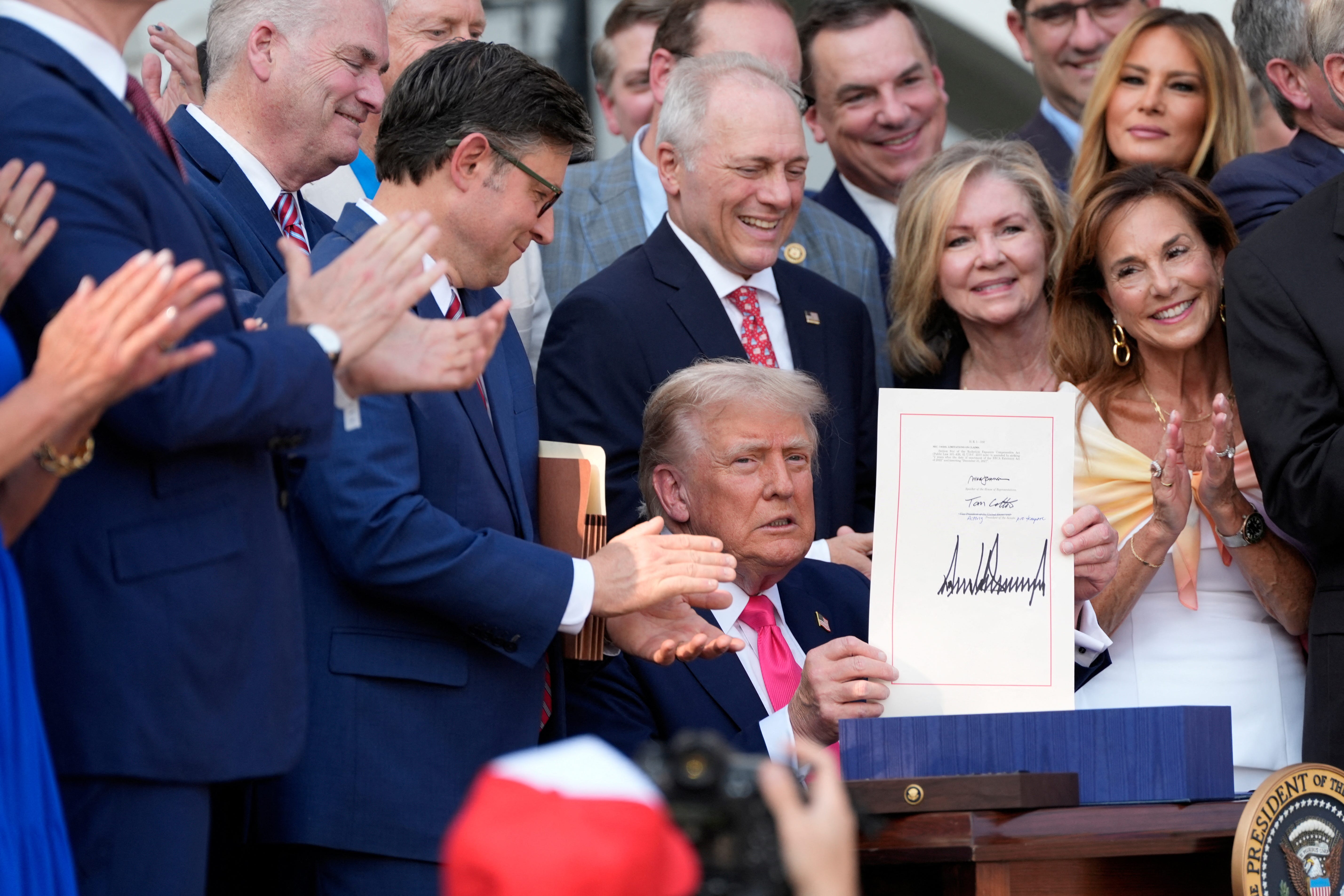
Trump ran on tax cuts. But his economic policies have driven up taxes and costs for all but the wealthiest 1% of Americans, a think tank reports.
The Trump administration’s economic policies have driven up taxes and costs for all but the wealthiest 1% of Americans, according to a new analysis from an economic think tank.
A typical American consumer, someone in the middle 20% by income, will pay about $1,700 more in taxes and other costs in 2026 because of Trump’s policies, the report found. The poorest 20% will pay about $750 more.
Only the top 1% of earners will pay less: $12,560 less, according to the report from the Institute on Taxation and Economic Policy (ITEP), a left-leaning think tank.
The Oct. 8 release focuses on three major policy changes under the second Trump administration: new tax provisions enacted in the One Big Beautiful Bill Act, the expiration of Affordable Care Act tax credits from the COVID-19 era, and price increases triggered by tariffs, the Iran war and immigration actions.
Those added costs may help explain why consumer confidence stands near an all-time low, and why household debt is rising, at a time when the U.S. economy appears strong on other measures.
“No matter how much the Trump administration touts the tax cuts that they’ve enacted, they can’t get around the fact that they’ve caused increased costs that more than offset those tax cuts by a lot for most people, except for the rich,” said Steve Wamhoff, federal tax policy director at ITEP.
Did Trump's economic policies raise costs for Americans?
The report comes from a group that is generally critical of the Trump administration and its economic policies.
In response, the Trump administration offered a very different assessment of the president's impact on the U.S. economy.
“President Trump’s aggressive, pro-growth economic agenda has stopped [former President Joe] Biden’s inflation crisis, driven economic growth, and created private-sector jobs, and will continue to deliver economic wins over the next two years," said White House spokesman Matthew Middleton.
Middleton added, "Democrats pretend to care about ‘affordability’ while supporting socialist candidates whose policies would cost every American household $355,000 over 10 years while adding $49 trillion to the deficit.”
A White House report on the Trump tax cuts, released in June, found that they "delivered the largest share of tax relief directly to millions of low- and middle- income Americans."
Other policy experts questioned some findings in the ITEP report. A lot depends on how you score Trump’s policy moves.
The One Big Beautiful Bill Act extended tax cuts Congress approved during the first Trump administration under the Tax Cuts and Jobs Act of 2017, along with some new cuts.
If you give the Trump administration credit for extending those 2017 tax cuts, rather than letting them expire, then all but the lowest-income Americans saved money on taxes in the One Big Beautiful Bill Act, a point the ITEP report acknowledges in an appendix.
“Without that action, taxes would have gone up,” said Kyle Pomerleau, a senior fellow at the libertarian American Enterprise Institute (AEI).
But the ITEP report only considers new tax policies enacted by Congress and Trump in 2025.
According to Wamhoff, the point of the report is to show how Americans have actually experienced the economy in the second Trump administration.
Most Americans, he said, “do not notice the extension of a tax break that has already been in effect for several years, and which they have been benefiting from for many years.”
How did taxes change under the One Big Beautiful Bill Act?
For a middle-income American, the report says, the One Big Beautiful Bill Act yields about $380 in new tax savings in 2026. If you include tax cuts that were already in effect, the same taxpayer saves another $780.
ITEP estimates Trump’s other “price-increasing” policies, including tariffs, immigration crackdowns and waging war in Iran, will cost the same middle-income consumer $1,850 in 2026. That figure estimates inflation caused by Trump’s policies.
Another major policy shift covered in the report is the expiration of COVID-era health care tax credits that lowered the cost of health insurance for millions of Americans under the Affordable Care Act.
The ITEP analysis counts that as a policy decision by the Trump administration, one that will cost the average middle-income American $230 in 2026.
Advertisement
“When you put together all of the policies that really affect the taxes and the costs of Americans, the typical American in every income group is worse off, except Americans in the richest 1%,” Wamhoff said. “That’s the one group for whom the tax cuts they get are big enough to exceed the excess costs of the other policies of the Trump administration.”
But here, too, a lot depends on how you’re keeping score.
Those COVID-era health care tax credits were “meant to be temporary,” said Adam Michel, director of tax policy studies at the libertarian Cato Institute. “Democrats had the option of making them permanent when they controlled the White House, and they didn’t.”
The ITEP report counts the expiration of those credits as a Trump policy move, because the president and Congress could have extended them.

How much did tariffs and the Iran war raise prices?
But the biggest new cost to most Americans, the report says, comes from new Trump policies that raised consumer prices: tariffs, the Iran war and restrictive immigration policies.
The report compares actual price increases in the second Trump administration with inflation projections from the Congressional Budget Office when he reclaimed the presidency. Trump’s policies will cost middle-income Americans an extra $1,850 in 2026, the report says.
Is that a fair critique? It depends on whom you ask.
“I think it’s fair to say that all of those policies have made life more expensive for Americans,” said Michel of Cato. “Tariffs are tax increases on Americans.”
The Cato Institute, like AEI, generally favors limited taxation.
But Pomerleau of AEI questions the validity of treating non-tariff inflation as a cost to American consumers. In inflationary times, he said, both income and prices generally go up. Consumers can largely cover higher prices with higher income, although the latest federal inflation report shows prices outpacing wages.
“It’s a complete wash in terms of its effects on people’s wellbeing,” he said.
Who pays more because of Trump's economic policies?
Add it all up, the ITEP report says, and nearly every group of American earners will pay more in taxes and added costs in 2026 because of Trump's economic policies.
The poorest 20% by income will pay an extra $750, the report says. The middle 20% will pay an extra $1,700. Everyone else, up to the 98th percentile by income, pays at least an extra $1,000.
The wealthiest 1%, by contrast, will spend $12,560 less in taxes and other costs in 2026.
Why would the top 1%, alone, save money from Trump’s policies?
The reason, ITEP says, is the Trump tax cuts. Inflationary policies will cost the top 1% an extra $15,990 in 2026, the report says. But new tax cuts will save them $28,550.
Other analysts have reached similar conclusions about the Trump tax cuts. The Congressional Budget Office, the Peter G. Peterson Foundation and others have found that tax cuts in the One Big Beautiful Bill Act favor high-income households.
But here, too, a lot depends on whom you ask.
The original 2017 Trump tax cuts lowered average tax rates for every income group, including earners who pay very little tax, according an analysis by the nonpartisan Tax Foundation.
Yes, top earners saved the most tax dollars from the Trump cuts, but they paid a lot more tax to begin with.
“Of course,” said Michel of Cato, “the people that pay the most tax are going to see the most dollar-value reduction.”
This article originally appeared on USA TODAY: Trump's policies raised costs for all but the top 1%, report says
Source: “AOL Breaking”
