


The great football ‘academy’ rip-off
The great football ‘academy’ rip-off

Tim WigmoreSun, October 25, 2026 at 6:01 AM UTC
0

Next Monday, during half-term, dozens of children will pack into Chelsea’s training ground. These players have not been selected. Rather, they will be at Cobham because their parents have paid for coaching.
Each week at Chelsea, parents pay £120 an hour for children to receive one-on-one coaching. This is merely a glimpse of how clubs monetise parents. A two-week camp at Charterhouse School next summer, during which children train for up to 24 hours each week with Chelsea coaches, costs £4,700. Training is so bespoke that there are even goalkeeping camps.
Chelsea are not alone. Arsenal charge £2,035 a week for their football camps, which are held at an array of elite independent schools. Almost all Premier League clubs run something similar: schemes in which the criterion for entry is a child’s ability to pay, not play. This is a microcosm of a broader trend: the rise of American-style “pay to play” in British youth football.
In the US, parents spend an estimated $40bn (£30bn) a year on sport, with the figures soaring by 46 per cent from 2019 to 2024, according to the Aspen Institute. The average US parent now spends $1,491 (£1,115) per child annually on sport, with the vast majority of this money going to privately run leagues or coaching.
Pay-to-play sports could even be an issue in the next US presidential election. “For-profit companies are buying up the rituals of American childhood and selling them back to parents,” Chris Murphy, the senator for Connecticut and a contender for the Democratic nomination in 2028, wrote in May. He recently introduced legislation that would ban private equity from youth sports.
The UK youth sports climate has traditionally been very different, sustained by grass-roots clubs rather than private investment. Yet the landscape is shifting. Grass-roots facilities have suffered from a generation of economic woes since the 2008 financial crisis. Parents have been driven to seek out extra sport for their children – either through privately run academies, or professional clubs’ commercial schemes.
The cost of youth sport in the UK is more expensive than ever. Research last year found that the average parent now spends £443 per child annually on sport, which can be many times more for those pursuing sport seriously.
UK following US model
Hundreds of thousands of children do less sport than they would like because of financial pressures. Twenty-six per cent of young people say that if their family had more money to spend on activities out of school they would do more sport, the Youth Sport Trust found this year. Nineteen per cent of families cut back on local sport for financial reasons in the past 12 months.
UK youth sport is coming to look more like American youth sport, where family income often dictates how much a child can play. Investors – including from private equity groups such as Clearlake Capital, the majority owners of Chelsea – spy an opportunity to monetise grass-roots football. When contacted by Telegraph Sport, Clearlake declined to comment.
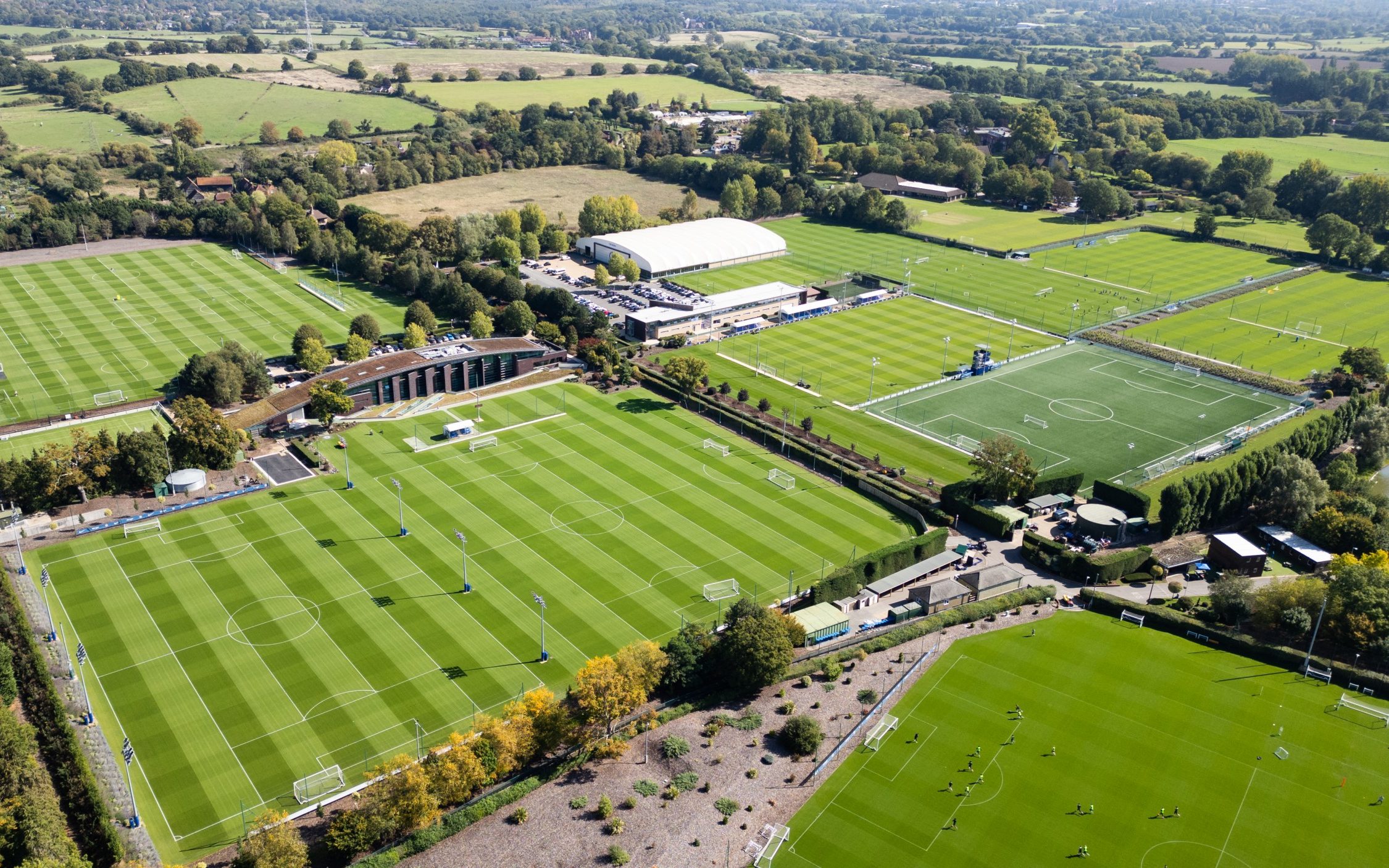
Parents pay a premium for their children to get the Chelsea experience at the club’s Cobham training HQ - iStock Editorial
If Premier League clubs are following US-style methods in youth sport, this reflects the growing influence of the US on the top flight. Twelve Premier League clubs now have American owners, who are often eager to import the US template for extracting extra cash from parents through youth sports.
The Premier League’s financial rules, which tie spending to income, have made clubs increasingly eager to find new ways to generate extra revenue. While children’s training camps were historically almost entirely aimed at boys, the boom in girls’ football has effectively doubled the number of children that clubs can potentially attract to pay for sessions.
“The monetisation of the brand to a new demographic for football clubs is simply an opportunity that they feel is untapped,” says Kieran Maguire, an expert in football finance from the University of Liverpool. “This is certainly the direction of travel that we are seeing: clubs want to sell experiences, not just seats. The utilisation of these school schemes is one way of doing so.”
Football camps with marquee names are nothing new. Bobby Charlton’s Soccer Schools, launched in the afterglow of England’s 1966 World Cup triumph, had a distinguished history until folding in 2021. But in recent years Premier League clubs have been increasingly aggressive in weaponising their brands to generate extra cash from parents.
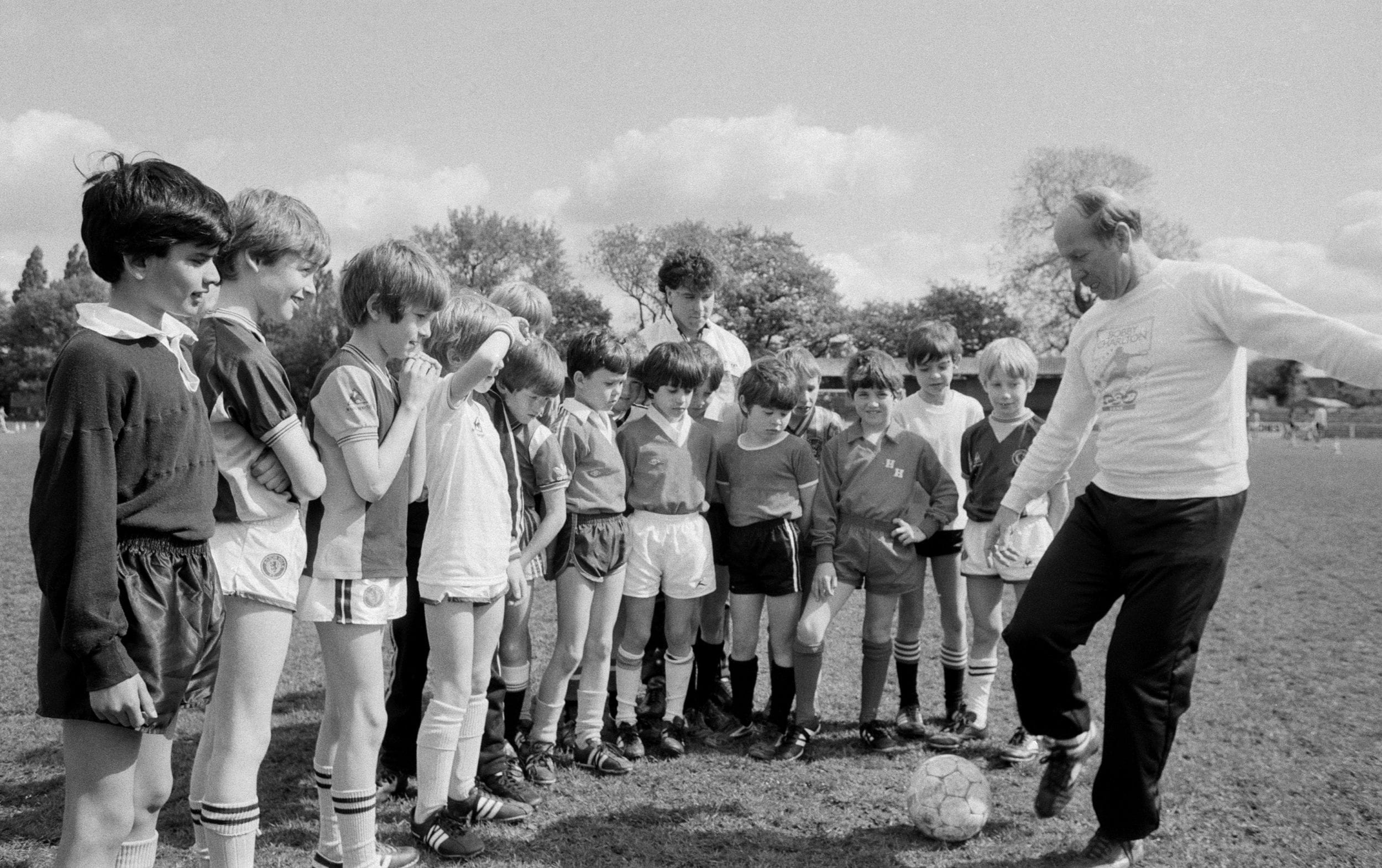
Bobby Charlton gives a demonstration to his Soccer School students at Manor Green Football Club in Birmingham - Getty Images
Clubs’ ambitions are unrestricted by international borders. Tottenham Hotspur have partnerships with schools in Australia and New Zealand. Their coaches also deliver weekly PE lessons to students in Hong Kong, including at Harrow International School: a partnership between the Premier League and private schools, two of Britain’s most successful exports. In September, Manchester City opened their first football school in Thailand, partnering with Highgate International School.
School paying Chelsea ‘six-figure sum’
Yet the new dynamic is most visible in Britain. Eighteen months ago, Chelsea did not have a single official partnership with an independent school. Now, they have six, and will soon announce their seventh.
At each school, a full-time member of Chelsea’s staff is embedded to deliver the programme, using the club’s coaching techniques. Children involved receive up to nine training sessions a week. Participating children receive a stadium tour at Stamford Bridge and a training session at Cobham.
The partnerships go far beyond Chelsea’s traditional boundaries. Unlike in rugby, there are no geographical limits on who a club can partner with. Chelsea’s associated schools stretch as far as Wells Cathedral School in Somerset, Woodhouse Grove School in Yorkshire and Glenalmond College in Perthshire, Scotland.
For clubs, the partnerships enable them to nurture fans in new areas. For the schools, the links with elite Premier League clubs double as a marketing tool. This enables the schools to tap into the booming demand in the private sector for football – including among foreign boarders, who pay the highest rate of fees.
Clubs and schools alike get another benefit from the schemes: extra cash. The exact nature of the partnerships is a private matter between the school and clubs. One partnership is thought to entail the school paying Chelsea a six-figure sum per year.
“Heads will be extremely sensitive to this information getting out, particularly in the current financial climate,” an insider says. “Such an investment in football with fees at an all-time high would not have the right PR message.” The calculations for schools, he explains, are as simple as the cost covering itself if the partnerships help to recruit five extra boarders.
Parents at the Downs Malvern pay an extra £5,000 per year for the Chelsea development programme, in addition to annual fees of up to £35,100 for UK-resident boarders. Culford School, which has a similar partnership with Tottenham Hotspur, charges £2,335 a term for its football academy, in addition to full boarding fees of £51,120.
Advertisement
Independent schools and Premier League clubs partner just as freely outside term-time, providing clubs with another source of income. The private schools which partner with clubs for camps double as a who’s who of elite private schools. Winchester College, alma mater of Rishi Sunak, is used by Chelsea; Haileybury, alma mater of Clement Attlee, is used by Arsenal; Uppingham School in Rutland hosts a Tottenham summer school.

Winchester College, which partners with Chelsea, charges boarding students £62,100 per year - Getty Images/Christopher Pillitz
A club running 10 different camps could earn £3m profit a year from these ventures, Maguire says. “Clubs are looking at anything and everything.”
Such camps operate wholly outside the Premier League’s academy structure. All club academies must be free, like the foundation schemes that Chelsea and other clubs run in their communities.
Commercial pay-to-play camps are run independently, and considered a matter for individual clubs rather than the Premier League. Clubs, then, are effectively free to charge whatever parents are willing to pay.
Clubs stress that, while players will enjoy the thrill of training in their side’s kit, such schemes are meant for individual enjoyment rather than as a way to break into the professional game. But parents whose children have higher aspirations are entitled to hope that the camps might advance their prospects. Indeed, information about Tottenham’s football development programme notes that James Rowswell, who made his first-team debut this year, previously enrolled in the programme.
“A parent came to me and said, ‘oh, my son’s been scouted by Arsenal’ – we’ve got to a development centre,” one insider recalls. “I said, ‘are you paying for it?’ They were.
“Professional clubs that run development centres where the players have to pay – I disagree with that. I think if the players have the ability, they shouldn’t be paying to go to the development centres.”
For children desperate to forge a career in the game, private academies offer another potential route. A growing number of academies cater to players outside the professional system, often stressing their links with club scouts.
The very best footballers will always be coveted regardless of their socioeconomic background. But for players on the fringes, coming from a family with the means to support them to improve – through football development centres, academies and even one-on-one coaching – might become a significant advantage.
After being released from Wycombe Wanderers aged 16, Matty Cash trained at the FAB Academy for 18 months. FAB Academy arranged a showcase game against Nottingham Forest, setting Cash on the path to earning a trial at the club and then playing in the Premier League and for Poland.
Since the FAB Academy, which is based at the Bisham Abbey National Sports Centre, launched in 2011, 24 players have gone on to sign professional contracts. FAB is run as a community interest company rather than a normal for-profit business. In sixth form, scholars pay £2,995 for a 40-week programme that includes nine-to-five training, education and coaching badges alongside matches.
“We’re trying to offer exactly what they would get at a pro club,” Nas Bashir, the director of Fab Academy, says. “The idea is to improve them as a player, improve them as a person and get them on that career path – to either be a pro footballer or stay in the sport.”
‘They’re living off the dreams of kids’
Yet some academies are better at extracting cash from parents than advancing players into the professional game. Just like with Premier League clubs’ football development programmes, one-on-one sessions are particularly lucrative.
“There are people out there who are doing it to make money,” Bashir says. “Some people will say, ‘yeah, we can get you a pro club, we’re going to get you a pro trial, we can get you this, we can get you that’.”
One coach in a private academy says that some academies do not invest sufficiently in qualified coaches. “If it’s run well, and parents are happy, that’s the main thing,” he says. “But you’ve got a lot of Joe Bloggs that think: ‘Oh, let’s just set up an academy tomorrow. Call it an academy, and not do it properly.’”
Such academies generally remain run by individuals or small groups – a different model to the norm in America, where private equity companies run entire leagues. But as the landscape shifts, private equity companies might increasingly sense opportunities to invest in UK grass-roots sport. Through Chelsea, Clearlake Capital already has.
“From a private equity standpoint, PE firms have started to realise that underlying demand is robust,” says an insider working in investment and sport in the US and UK. “This is an attractive and stable area to participate in. Parents are willing to pay.”
Two areas of youth sport could be particularly fertile for private equity companies to invest in, the source believes. The first is for six to 12-year-olds, perhaps running multi-sport centres across a range of sports throughout the year. The second is in developing programmes for players on the periphery of the professional football academy system aged about 16, and building a programme of coaching and matches that means that the players improve enough to be coveted by teams.
“Is there a way to create a market here?” adds the source. “My suspicion is that the answer is yes, but at a more modest level than in the United States. It’s starting to bubble. There will be a layer of opportunity.”
Just as in the US, Premier League clubs and privately run academies alike are embracing an eternally reliable source of cash: parents trying to fulfil their children’s ambitions.
“It’s taking advantage,” one school coach says about the promises made by private academies. “It’s just living off the dreams of kids.”
Source: “AOL Sports”
