


Highly educated Colorado workforce relies heavily on transplants
Highly educated Colorado workforce relies heavily on transplants

Kelly Lyell, Fort Collins ColoradoanMon, August 10, 2026 at 11:01 AM UTC
0
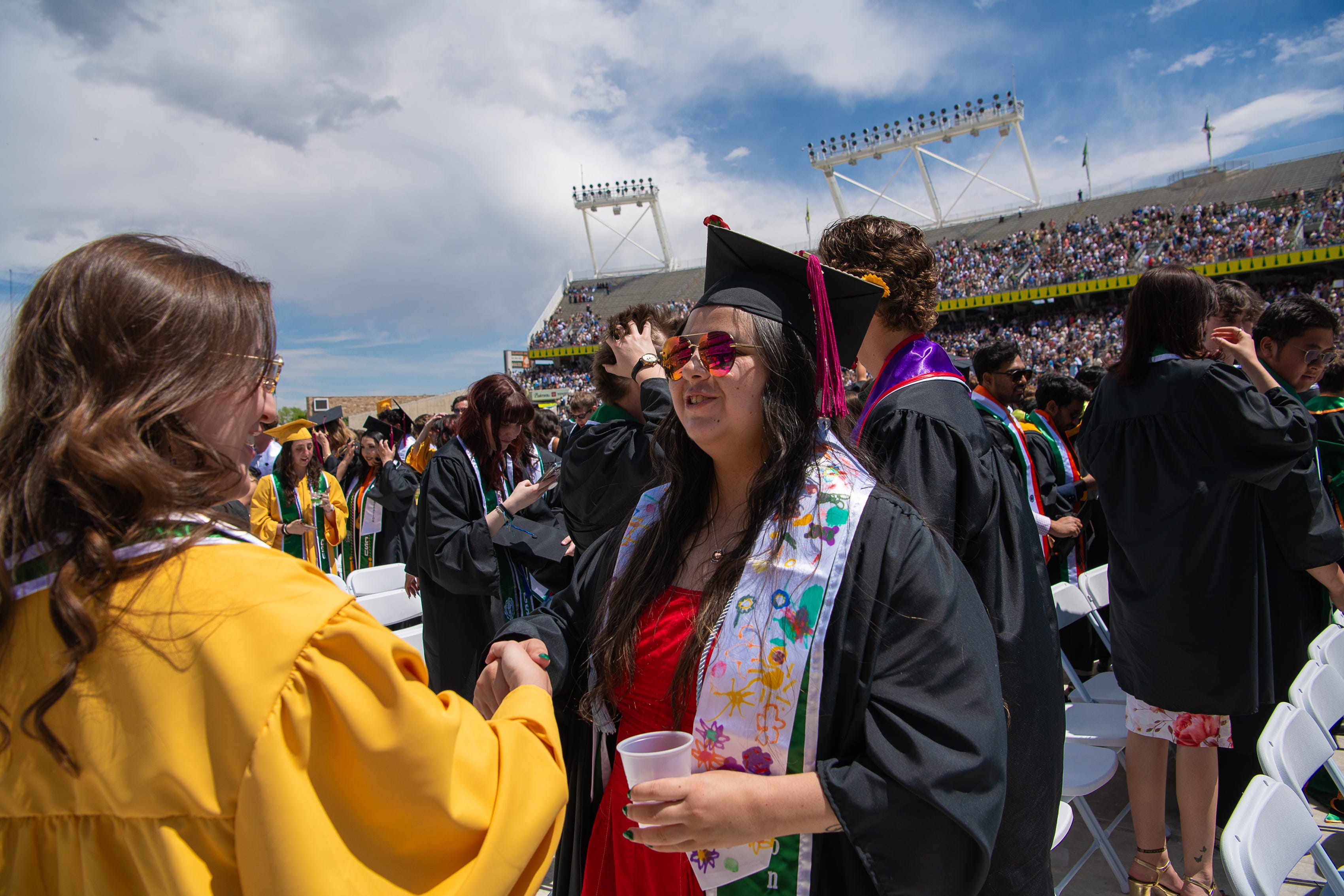
Colorado ranks No. 2 nationally in the percentage of residents with college degrees, yet near the bottom of national rankings of homegrown educational attainment.
And that’s a big concern for the state as it tries to better align its educational system with its workforce needs, a key goal of Colorado Gov. Jared Polis as he completes his second four-year term.
Nearly two-thirds of Colorado’s college-educated workforce attended high school in another state, and 44% obtained their highest college degree out of state, which was the highest among the states studied, a new report on workforce migration found.
That’s well below national averages and put Colorado on the extremes in a report released Aug. 6 by the Strada Institute for the Future of Work, in collaboration with the W.E. Upjohn Institute for Employment Research.
The percentage of college-educated workers in Colorado who went to high school in the state was 36%, the lowest among the 34 states studied in the report, Talent in Motion: Interstate Migration of College-Educated Workers.
The number of responses to one of the two primary surveys used to prepare the report were insufficient for the 16 states that were excluded, the report said.
“The findings show how successfully Colorado has attracted highly educated workers while raising questions about how the state can strengthen its own education-to-workforce pipeline,” Strada Institute for the Future of Work spokesperson Catherine Ahmad told the Coloradoan by email.
Colorado was ranked No. 2 nationally, trailing only Massachusetts, for its percentage of residents who hold a bachelor’s degree or higher (44.4%) in the most recent U.S. Census Bureau American Communities Survey data, published in 2021. An version of the American Communities Survey Data, released in 2024, had Colorado ranked No. 1 in the percentage of residents holding a college associate degree or higher, at 55.9%, according to U.S. News & World Report.
As a result, businesses must often import their college-educated workforce, luring employees with the skills they require from other states.
“Colorado has seen robust job growth, but our businesses report that finding the right talent is their top challenge,” reads the summary of a December 2025 report from Polis’ office in support of his executive order, Reimagining the Future of the Postsecondary Talent Development System in Colorado.
Although much of the governor’s focus has been on expanding educational options beyond the traditional four-year college path for the state’s high school graduates, the state’s annual Higher Education Return on Investment Report for 2026, released last month, found that those earning bachelor’s degrees continue to “experience the fastest 10-year median wage growth rate at 60.6%,” compared to 44.5% for those with two-year associate degrees and 34.9% for those with industry certificates.
“As Colorado faces changing workforce demands and student needs, we must continue creating affordable, flexible pathways that connect more learners to good-paying jobs and help employers find the talent they need,” JB Holston, executive director of the Colorado Department of Higher Education, said of those findings in a July 31 news release. “By expanding opportunity and promoting innovation, we can ensure Colorado remains one of the best places to live, work, and build a future."
Advertisement
The high percentage of Colorado residents who have obtained college degrees, regardless of where they were earned, helped the state secure the No. 1 ranking for education in U.S. News & World Report’s 2026 Best State rankings, which were released July 27.
Still, Colorado ranked slightly below the national average for retention of its own college graduates in its workforce, at 61%, the college-educated workforce migration report noted. The national average was 66%.
Nationally, two-thirds of college-educated workers are living in the states where they went to high school, the workforce migration report found. Of those workers, 55% obtained their highest college degree in the state in which they are now living, while 12% went out-of-state for college before returning to work in their home state.
Nearly 1-in-4 college-educated workers, 24%, moved to the state where they now live for work, and 9% moved to their current state of residence for their college education and chose to remain.
“Highly educated workers are an essential part of sustaining economic vitality and growth,” the college-educated workforce migration report noted in its introductory summary. “This study provides insights that can help policymakers characterize the sources of their college-educated workforces, examine the factors associated with interstate migration and invest strategically to grow the talent their states need.”
Michigan was at the top of the rankings for the number of college-educated people in its workforce who also attended high school in the state at 72%. Michigan, Ohio and Arkansas had the lowest percentage of workers who obtained college degrees out of state at 12% apiece among the states studied.
Many of the states that ranked highest in the percentage of homegrown talent in their college-educated workforce ranked below average in college attainment, the report noted.
Primary data sources for the study were a Strada-Gallup Education Consumer Survey of Americans aged 18-65 conducted by telephone between June 29, 2016, and April 5, 2019, and the Current Population Survey Annual Social and Economic Supplement, a nationally representative survey conducted monthly by the U.S. Census Bureau and Bureau of Labor Statistics.
Although the report did not include all 50 states in its formal analysis, it did provide some rankings based on the limited number of survey responses received and estimates.
When all 50 states were included, Colorado was No. 42 in the percentage of college-educated workers who attended high school in the state in which they now live and tied with Vermont for No. 3 in the percentage of college-educated workers who earned their college degrees out of state, trailing only Nevada, Delaware and New Hampshire.
Reporter Kelly Lyell covers education, breaking news, some sports and other topics of interest for the Coloradoan. Contact him at kellylyell@coloradoan.com, x.com/KellyLyell, threads.net/KellyLyell and facebook.com/KellyLyell.news.
This article originally appeared on Fort Collins Coloradoan: Highly educated Colorado workforce relies heavily on transplants
Source: “AOL Money”
