


From Uniqlo to Zara, fashion brands embrace clothing repairs to win over Gen Z shoppers
From Uniqlo to Zara, fashion brands embrace clothing repairs to win over Gen Z shoppers

Anne D’innocenzioMon, August 10, 2026 at 1:07 PM UTC
0
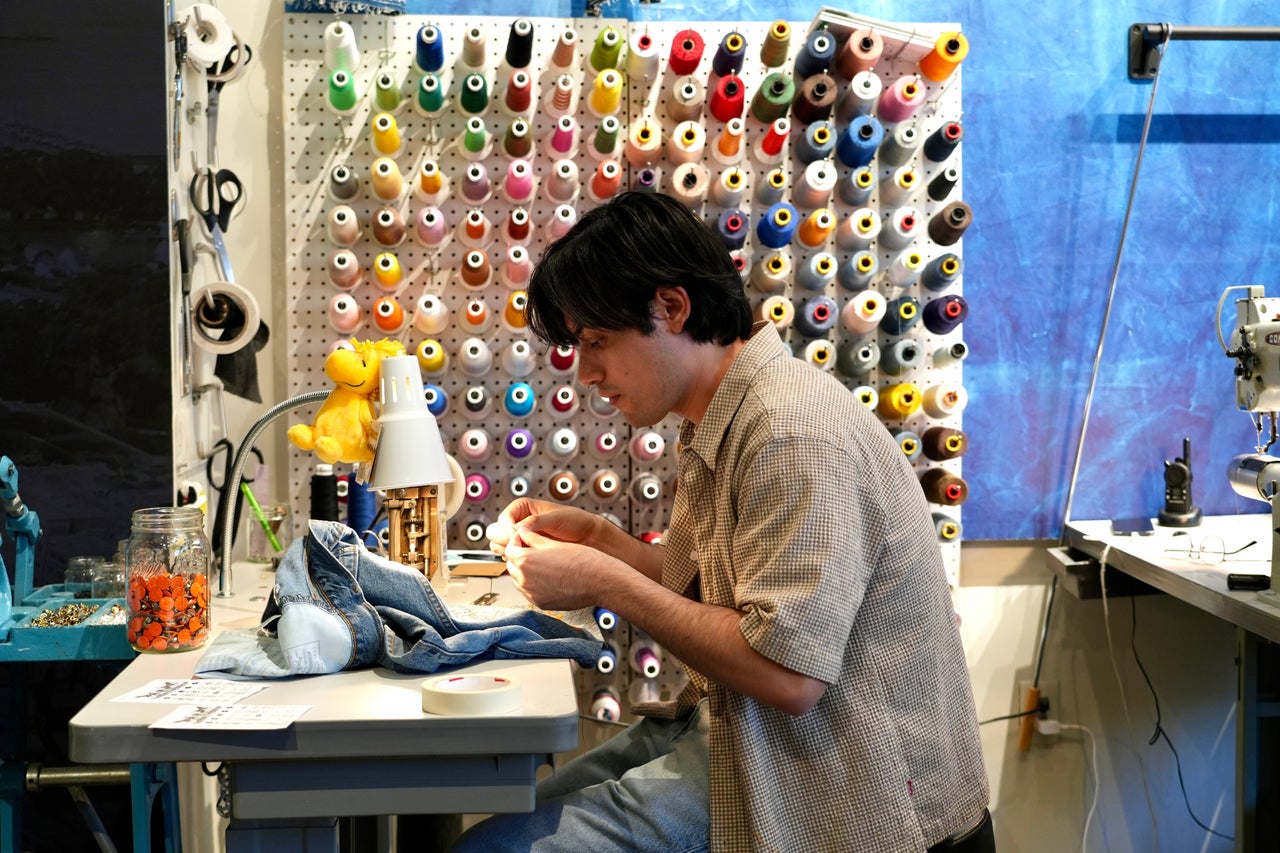
Urging shoppers to repair worn garments rather than buy new ones might seem like a counterproductive retail strategy. However, offering in-store repairs and sewing workshops has become an essential service for clothing brands seeking to appeal to young consumers focused on saving money and protecting the planet.
While high-end fashion houses and outdoor retailers like Patagonia and L.L. Bean have offered product repairs for decades, the concept is gaining wider traction. Mainstream apparel chains, including Levi Strauss & Co., Uniqlo, and budget retailer Primark, are among the companies hoping to win over Generation Z buyers with a needle and thread.
Levi's created a handstitching course for high school students after identifying that many Gen Z consumers lacked basic sewing skills despite their interest in thrifting and sustainability. Staff members spend 90 minutes teaching teenagers four basic tasks: sewing on a button, hemming, patching a hole, and fixing a tear.
The Wear Longer program, which the San Francisco-based company is expanding across the U.S., builds upon the mending and customization services Levi's provides at hundreds of locations globally.
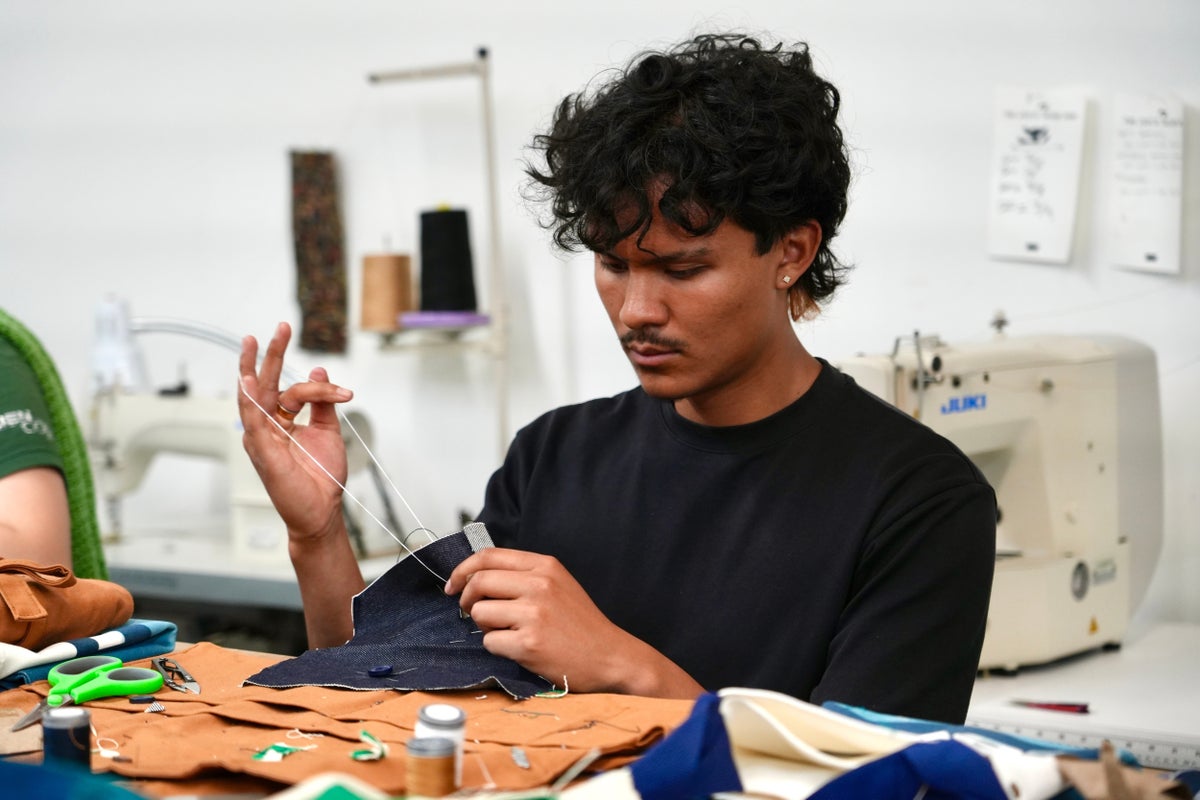
Jesse Sanchez practices sewing during a clothing repair workshop at a Levi's retail store in downtown San Francisco in July 2026 (AP Photo/Terry Chea)
"We think it’s important to empower the people who buy our clothes with the skill sets to maintain them, to get them to that second life," Paul Dillinger, Levi's head of global design innovation, said.
Detroit resident Chloe Halprin, 25, represents the type of consumer retailers aim to reach with a message centered on repairing rather than discarding clothes.
In high school, Halprin routinely bought cheap, trend-focused items. Fixing a major rip was beyond her limited sewing ability, meaning damaged tops or skirts from Forever 21 were often discarded: "I might just throw it away."
Today, Halprin, a nonprofit grant writer, purchases most of her clothing secondhand. Having recently learned to hem on a sewing machine, she plans to attempt projects like turning a skirt into a shirt.
"I try to be conscientious of my carbon footprint," Halprin said. "I really don’t like waste. I’m trying to save money as well."
Mending is a tiny part of cutting the world's mountains of textile waste
Mending remains a small component of addressing global textile waste, but its shift from a craft to a customer retention tool comes amid rising pressure on the fashion industry to reduce pollution and climate impacts.
Textile waste—including manufacturing scraps, unwanted clothing and linens, and unsold goods—is a major industry hurdle. The United Nations Environment Program estimates global fabric waste is generated at a rate equivalent to a garbage truck being dumped or incinerated every second.
Researchers agree that repairing and reselling clothing reduces environmental impact, particularly if it replaces a new purchase. However, many warn these practices remain too limited to offset ongoing growth in garment manufacturing and consumption.
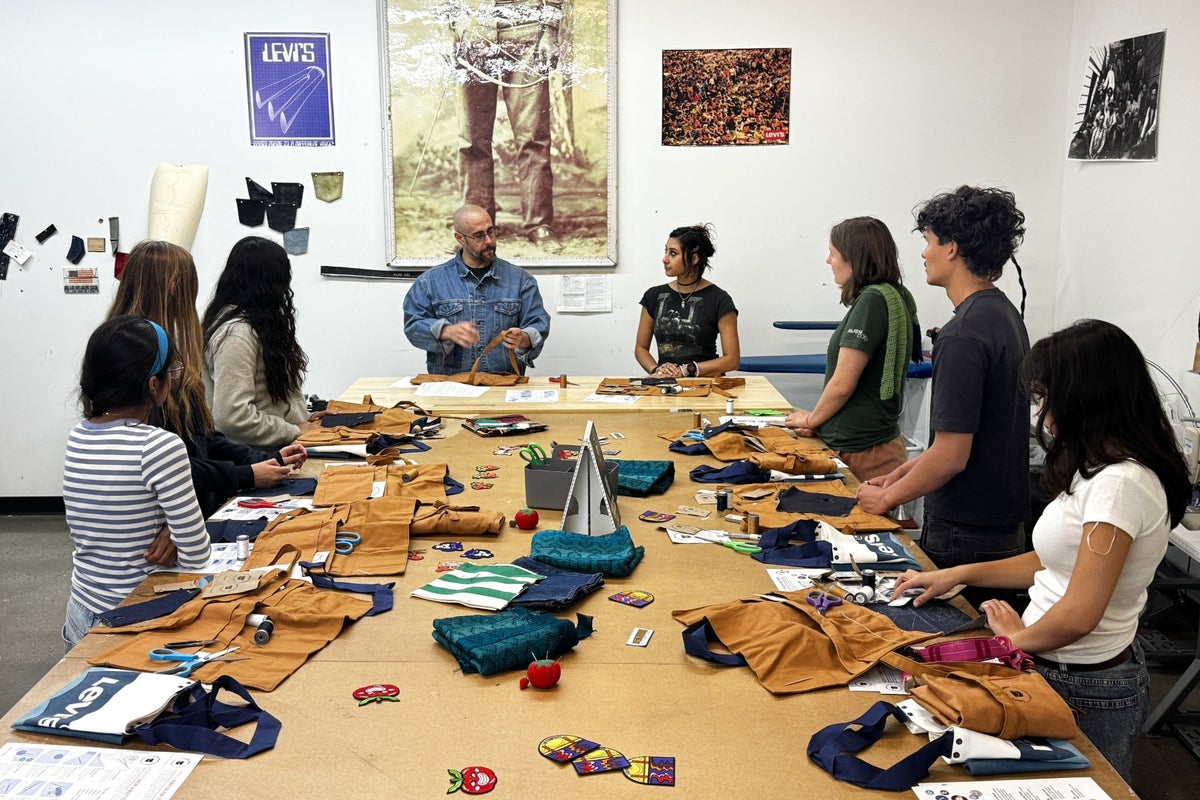
Levi’s employees teach students during a sewing workshop at a Levi's retail store in downtown San Francisco (AP Photo/Terry Chea)
Global clothing production roughly doubled from 2000 to 2015, while the average number of wearings per garment dropped by about 36%, according to the Ellen MacArthur Foundation. The sustainability nonprofit estimated that less than 1% of discarded clothing materials were recycled into new apparel.
Generation Z, born between 1997 and 2012, grew up with fast fashion and e-commerce before facing the economic effects of the coronavirus pandemic and post-pandemic inflation.
Whether driven by tighter budgets or an aversion to materialism, Gen Z has fueled faster growth in the preowned apparel market than in traditional U.S. retail sales, market intelligence firm GlobalData estimated in a report with resale platform ThredUp.
For companies producing new clothing, repair initiatives address "some deeper consumer needs and consumer behaviors at the moment," GlobalData retail analyst Neil Saunders said.
"It puts a halo on the brand," he said.
Advertisement
Skeptics say the environmental impact of retailer repairs is limited
The hands-on response from mass-market retailers, especially fast-fashion chains like Primark, Zara and H&M, has generated interest as well as skepticism.
Zara, which has its headquarters in Spain, launched a digital platform in 2022 for customers to resell their used pieces and to request basic alterations and repairs. The program is available in 17 of the nearly 100 countries where the trend-driven retailer operates.
Ireland-based Primark has focused more on customer education. The value-focused retailer hosts free “Love It For Longer” events where customers are taught skills like replacing zippers and buttons.
“Learning how to repair and care for clothing is probably one of the most simplest but absolutely totally effective ways that we can reduce waste and also extend the lifetime of whatever we buy,” Vicki Swain, Primark’s product longevity & partnership lead, said.
The company has held the workshops — more than 730 altogether — in nine of the 17 countries where Primark has stores, including the U.S. Primark also tested in-store repairs at three U.K. locations this year.
Swain argues that affordable clothes can be just as durable and repair-worthy as more expensive ones. Half the items Primark sells annually are basics like socks, underwear, T-shirts, and jeans, she said.
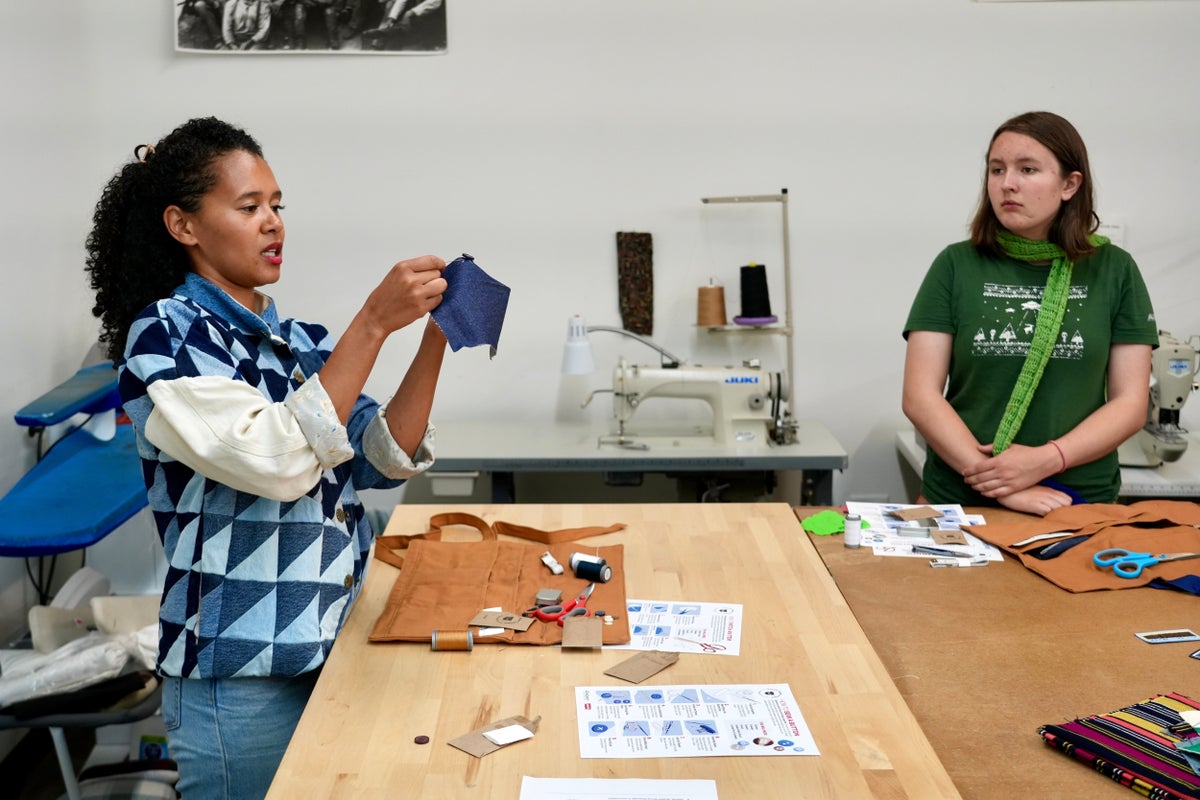
Whether driven by tighter budgets or an aversion to materialism, Gen Z has fueled faster growth in the preowned apparel market than in traditional U.S. retail sales (AP Photo/Terry Chea)
“There is nothing throw away about our products,” Swain said.
Uniqlo, which focuses on timeless wardrobe staples, offers a range of aftercare services, including repairs, decorative sashiko mending, embroidery and creative restyling.
Available in 75 of the Japanese mass-market retailer’s roughly 2,500 stores worldwide, the services are promoted as a national extension of the product life cycle. Providing them also strengthens Uniqlo’s connection with customers, said Jean-Emmanuel Shein, director of global corporate responsibility at Uniqlo USA.
Kate Fletcher, a professor of sustainability, design and fashion systems at Manchester Metropolitan University in England, said she thinks the repair initiatives of popular retailers are well-meaning, but she doubts they will have much environmental impact.
“The fashion sector’s primary source of impact is due to the overproduction of pieces and growing volumes of garments created,” Fletcher said. “Repairing a garment in store happens in addition to these growing production volumes, not instead of them.”
Companies want tax incentives to make repairs and secondhand sales more profitable
The question facing the fashion industry is whether repairs can evolve from niche service to commercially viable.
Sweden's H&M Group, which has more than 4,000 stores in over 80 countries, has been unusually candid about one of the biggest obstacles: the economics. The company has argued that repair and resale are desirable goals, but manufacturing new garments costs businesses less than keeping existing ones in use.
H&M experimented with mending and redesign studios in several European flagship stores over the past decade. The company also is majority owner of a secondhand clothing platform called Sellpy.
In May, H&M joined Primark, ThredUp and dozens of other fashion and textile businesses in signing a statement that urged governments in North America and the European Union to adopt tax policies that would make repairing and reselling clothes profitable.
Making mending work in retail is challenging because it's labor intensive and must be priced low enough to entice customers, Saunders, of GlobalData, said. Signals from consumers also are mixed, he said.
“I think younger shoppers still shop fast fashion because even though it goes against some of their principles, it is one of the most accessible parts of the market," Saunders said. "But what they’re doing as well, though, is they’re buying into alternative channels like resale. And they’re having things repaired.”
Source: “AOL Money”
