


Billionaire Investor Stanley Druckenmiller Just Issued a Sobering Warning to Wall Street
Billionaire Investor Stanley Druckenmiller Just Issued a Sobering Warning to Wall Street

Bram Berkowitz, The Motley FoolMon, November 23, 2026 at 1:05 PM UTC
0
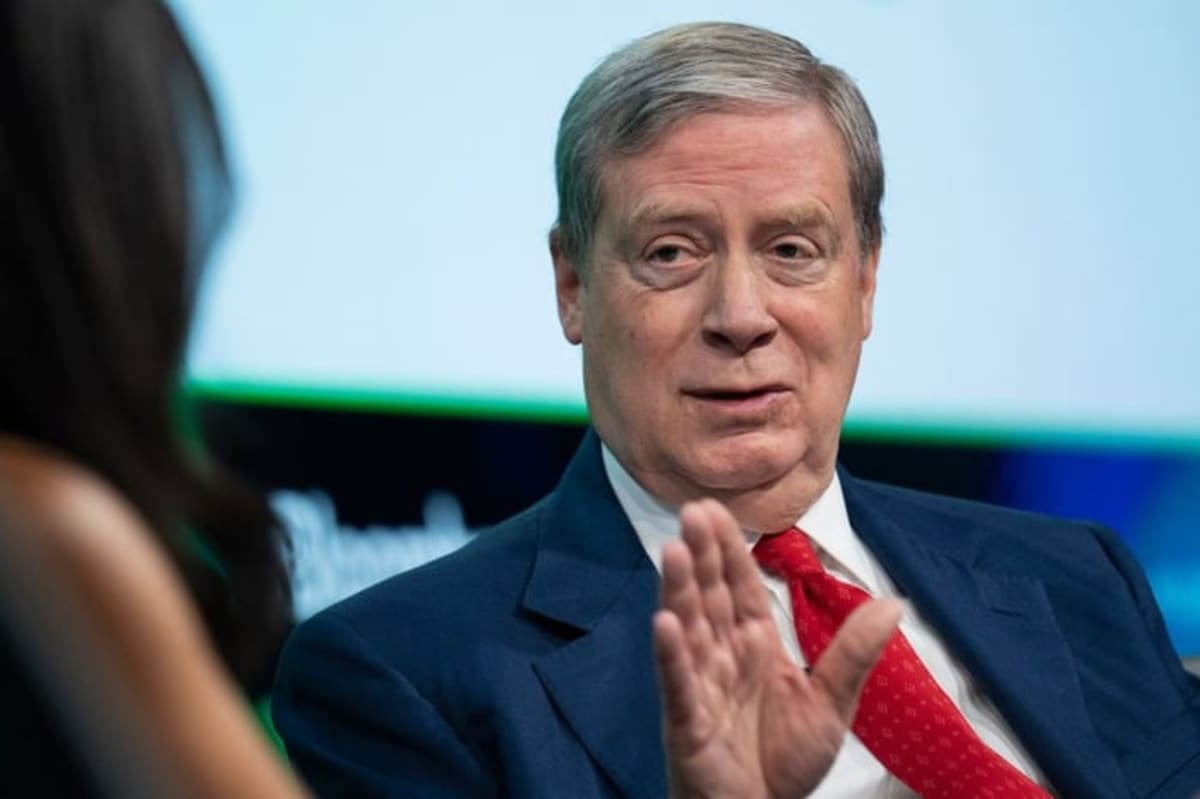
Stanley Druckenmiller. Image source: Getty Images.Key Points -
Druckenmiller and his team are considered macro strategists, meaning they closely examine developments at the Federal Reserve and in the economy.
Druckenmiller said he hasn't felt this uncertain about the market and economy in decades.
The billionaire also recently said he's taking a break from stocks.
These 10 stocks could mint the next wave of millionaires ›
Stanley Druckenmiller is truly one of the best investors of all time, and he's got the track record to back it up.
Druckenmiller launched his own hedge fund, Duquesne Capital, around 1981, with just $900,000. By 2010, Druckenmiller and his team had turned that start-up capital into $12 billion, generating mouth-watering average annual returns over 30% and never experiencing a full down year (although it was down about 5% in 2010, the partial year it shut down), which very few investors can say.
Missed AI’s "Act 1"? Act 2 Could Be 15x Bigger. Most investors think they missed the AI boat because they didn't buy Nvidia in 2005. But according to our analysts, we’re only at the end of "Act 1"—the R&D phase. "Act 2" is the global rollout. Continue »
Today, Druckenmiller still invests his personal wealth through the Duquesne Family Office. While Druckenmiller doesn't speak all that often, he appears on television or at conferences a few times a year.
The legendary investor just issued a sobering warning to Wall Street.
'Taking a break'
At the TomorrowX Summit in Austin, Texas, Druckenmiller answered questions about his current views on the economy and stock market, and I'm sure it had investors on Wall Street perking up.
While Druckenmiller may not be outright bearish on stocks or the market, he told the audience that he is "taking a break," which could last anywhere from two days to six months.
"So, we are not long equities. We're not short equities. I like to go short. I admit it," he said. "But for all the reasons I think most people came to this conference, I wouldn't dare go short the innovation and everything going on here. Also, a lot of that stuff is oversold and washed out. And I think positions are down tactically."
Overall, Druckenmiller is simply unsure right now. In fact, the George Soros protégé said that in the five decades he's been doing this, he can't recall a time when he's had less clarity on what will happen in the economy and stock market over the next year.
This should serve as a sobering warning for Wall Street, as Druckenmiller is arguably best known as a macro-driven investor focused on central bank policy, market liquidity, interest rates, and other economic trends.
What's arguably even more fascinating about this statement is that Druckenmiller knows Kevin Warsh, the chair of the Federal Reserve Board of Governors, as well as anyone. Warsh worked as a partner at his family office.
Advertisement
"We've had regime change at the Fed. A gentleman I know ... sat next to me for 15 years. Um, he is not happy that we had free money for 15 years while the deficit and everything else went through the roof," Druckenmiller said. "He's even less happy that inflation's been above target for five years. So, we have monetary tightening going on."
As mentioned earlier, Druckenmiller is not short equities because he still believes in much of the innovation happening in artificial intelligence. Druckenmiller has been a board member of the Sloan Kettering Cancer Center, and he thinks they will solve cancer, potentially as soon as 10 years from now. Furthermore, he thinks there will eventually be data centers in space, a hotly debated topic, particularly regarding feasibility.
The fact that Druckenmiller can't find clarity should be concerning
Druckenmiller is not a traditional long-term buy-and-hold investor, so as he said, he may change his views next week. However, I think the big takeaway and warning here is that Druckenmiller is as uncertain as he's been in five decades of investing.
If he doesn't know, then who possibly could?
One reason I suspect Druckenmiller is so uncertain is that the AI trade could take so many unforeseen turns. Some people believe it will be a tremendous success, significantly increasing productivity and benefiting others. The bears think people may be overestimating its capabilities and that all the capital investment will yield mediocre returns.
But what if it works so well that a tremendous amount of human labor is replaced and consumer spending, which accounts for the majority of U.S. gross domestic product (GDP), declines sharply? Or what if AI eliminates many of the inefficiencies in the world that enable many of today's jobs?
These are all things investors need to be thinking about. Now, long-term investors can certainly stay invested in the market. But it's likely a good idea to make sure that the valuations on stocks you own are driven by reasonable assumptions, and that your portfolio has at least some exposure to sectors or stocks less impacted by AI.
Missed AI’s "Act 1"? Act 2 Could Be 14x Bigger
Most investors think they missed the AI boat because they didn't buy Nvidia in 2005.
But according to our analysts, we’re only at the end of "Act 1"—the R&D phase. "Act 2" is the global rollout, a massive technology build-out that Google’s CEO says could be more profound than fire or electricity.
While everyone watches the chip designers, one "backbone" company provides the critical technology that Nvidia and AMD literally cannot function without. We’ve detailed this under-the-radar player in our new AI Playbook.
Continue »
The Motley Fool has a disclosure policy.
Source: “AOL Money”
